


Mar 30, 2026
3D Printing vs CNC Machining for Custom Fixtures: Cost and Lead Time Compared
The Fixture Dilemma
Custom fixtures—jigs, gauges, clamps, and work holders—are the backbone of precision manufacturing. Yet producing them is often slower and more expensive than the parts they help create. A simple bracket that takes 2 hours to machine can cost €150–€300 in labour and tooling. A complex locating fixture with internal geometry might demand weeks of CAM programming and trial-and-error.
3D printing has fundamentally changed this equation. But it hasn't replaced CNC machining; rather, it's created a choice. Understanding when to print, when to machine, and when to do both is essential for efficient production.
This article compares both technologies head-to-head across the factors that matter most: unit cost at different production volumes, lead time, design freedom, material options, achievable tolerances, and minimum order requirements.
Side-by-Side Comparison: The Numbers
Let's use a realistic example: a mounting bracket with a complex internal cavity, dimensions roughly 100 × 80 × 40 mm, tolerances ±0.2 mm, material aluminium (for CNC) or PA12 nylon (for 3D printing).
Cost Per Unit at Different Volumes
| Production Volume | CNC Machining | 3D Printing (SLS) | Winner |
|---|---|---|---|
| 1 unit | €250–€400 (setup dominates) | €25–€60 | 3D Printing (4–6× cheaper) |
| 5 units | €120–€180/unit | €25–€60/unit | 3D Printing (2–3× cheaper) |
| 10 units | €70–€120/unit | €25–€60/unit | 3D Printing (2–3× cheaper) |
| 50 units | €45–€80/unit | €25–€60/unit | Tie to slight CNC advantage |
| 200+ units | €20–€40/unit (high-volume pricing) | €25–€60/unit | CNC Machining |
Costs are approximate and region-dependent. Aluminium CNC rates in NL: €60–€80/hour. SLS printing: €1.50–€3.00/cm³ + handling. PA12 material costs labour, not material.
Lead Time Comparison
| Process Step | CNC Machining | 3D Printing (SLS) |
|---|---|---|
| CAM programming | 2–5 days (complex geometries need more time) | 1–2 hours (STL file prep) |
| Production (per unit) | 4–8 hours on machine | 0 hours (batch process; 5 units same time as 1) |
| Finishing | 1–3 hours (coolant removal, deburring, inspection) | 2–4 hours (powder removal, post-curing if needed) |
| Total time for 1 unit | 7–16 days (including queue time) | 3–5 days (including print cycle) |
| Total time for 10 units | 35–80 days (sequential production) | 3–5 days (batch printed simultaneously) |
Design Freedom and Geometric Complexity
This is where 3D printing's advantage becomes especially clear.
CNC Machining: Limited to what a tool can reach. Undercuts, internal cavities, and thin ribs demand multiple setups, custom fixtures, or sacrificial material. A bracket with a complex internal labyrinth or organic cooling channels becomes prohibitively expensive to machine.
3D Printing: No tool restrictions. Internal cavities, conformal geometry, integrated snap-fits, and organic shapes cost the same to produce. You can design for performance, not manufacturability constraints. This freedom often leads to lighter, stronger designs that outperform traditionally machined parts.
Example: A robot end-of-arm tool mounting plate with integrated cable routing and compliant hinges is nearly impossible to machine economically. Printed in reinforced thermoplastic or nylon, it can be designed as a single optimised component, reducing assembly labour and part count.
Material Options and Properties
CNC Machining
- Unlimited metal options: aluminium, steel, stainless, titanium, brass, copper
- Superior strength and stiffness (essential for load-bearing fixtures)
- Proven track record across all industries
- High temperature stability (maintained properties beyond 200°C)
- Limitation: expensive for prototyping or low-volume runs
3D Printing
- PA12 Nylon (SLS): Excellent tensile strength (48 MPa), good chemical resistance, heat deflection temperature 175°C. Ideal for general fixtures, locating pins, clamps. See PA12 vs PA11 comparison.
- Carbon-Fiber Reinforced Nylon or PETG: Higher stiffness-to-weight, suitable for lightweight fixtures and end-of-arm tooling
- TPU (flexible polyurethane): For gripper pads, vibration dampers, seals
- Engineering Resins (SLA): Highest dimensional precision (±0.05 mm), used for gauges and inspection tools
- Limitation: lower modulus and heat tolerance than metals; not suitable for heavy load-bearing or extreme temperatures
Dimensional Tolerances
CNC Machining: ±0.05 mm routinely achievable; tighter tolerances (±0.01 mm) possible with grinding or precision boring. Surface finish Ra 0.8–3.2 µm typical.
3D Printing:
- SLS (PA12): ±0.3 mm for typical dimensions; ±0.1 mm achievable on critical features with careful design and post-processing
- SLA (Resins): ±0.1 mm for standard parts; ±0.05 mm with advanced resins and post-cure treatments
- FDM: ±0.5 mm typical; not suitable for tight tolerance work
- Surface finish: Ra 3.2–6.3 µm typical; improves with chemical or mechanical finishing
For most fixture applications (locating, clamping, guiding), 3D printing tolerances are entirely adequate. For precision gauges or critical datum surfaces, CNC is still superior.
Minimum Order Requirements
CNC Machining: Setup costs are high (€200–€1,000+ for program and fixture design). Economically, you need at least 5–10 units to justify setup. Single-unit jobs exist but carry a premium.
3D Printing: No setup cost. You can profitably print 1 unit or 1,000 units with identical per-unit economics (within a batch). This is transformative for prototyping and low-volume custom work.
When 3D Printing Wins
- Rapid prototyping and iteration: Need 5 versions in a week? Print them all.
- Low to moderate volumes (1–50 units): No setup penalty.
- Complex internal geometry: Undercuts, cavities, and organic shapes are "free" in 3D printing.
- Lightweight requirements: Design for mass reduction without sacrificing rigidity.
- Quick turnaround: 3–5 days beats CNC's 2–4 weeks for standard geometries.
- Custom one-offs: Adapt a standard bracket design for a specific customer. Print it, done.
When CNC Machining Wins
- Tight tolerances (<0.05 mm): Precision is non-negotiable.
- High-temperature environments (>200°C sustained): Metal materials required.
- Metal-only applications: Steel, titanium, or aluminium for specific properties.
- High volume (200+ units): Economies of scale favour CNC.
- Heavy load-bearing: Metal strength and stiffness unmatched by plastics.
- Repeatable surface finish: Polishing, anodising, or plating processes well-established.
The Hybrid Approach: Best of Both Worlds
Many operations adopt a hybrid strategy:
Phase 1: Rapid Prototyping – 3D print fixture designs to validate geometry, fit, and functionality. Iterate quickly with stakeholders. Cost: €200–€500 across all iterations.
Phase 2: Pilot Production – Print 10–20 units for initial manufacturing runs. Validate performance in real production conditions. Cost: €500–€2,000.
Phase 3: Transition to CNC (if justified) – If fixture demand exceeds 100+ units annually, machine a metal version for long-term production. One-time tooling investment: €3,000–€8,000. Per-unit cost drops to €20–€40.
This approach combines the speed and flexibility of 3D printing for validation with the efficiency and durability of CNC for sustained production.
Real-World Economics: A Detailed Example
Scenario: A contract manufacturer needs a custom work-holding fixture for a new customer project. Expected volume: 25 units over 6 months. Lead time requirement: 3 weeks to first articles, then weekly deliveries.
Option A: CNC Machining
- CAM programming and fixture design: €1,500
- First article (1 unit): €350
- Production (24 units @ €95/unit): €2,280
- Lead time: 6–8 weeks to first article (4–5 weeks CAM + setups, then production)
- Total cost: €4,130
Option B: 3D Printing (SLS PA12)
- STL preparation: €150
- First article (1 unit): €45
- Validation and design refinement: €300 (if iterations needed)
- Production (24 units @ €40/unit): €960
- Lead time: 2–3 weeks to first article, then 2–3 day turnaround per batch
- Total cost: €1,455
Result: 3D printing delivers 65% cost savings, 3 weeks faster, and superior flexibility if design changes are needed.
Getting Started: Questions to Ask Yourself
- What's the production volume? (Under 50 units: 3D printing likely wins.)
- How tight are tolerances? (Under ±0.1 mm: CNC required. Beyond ±0.2 mm: 3D printing fine.)
- What's the lead time pressure? (Weeks acceptable: either works. Days needed: 3D printing wins.)
- Is geometry complex? (Complex internals: 3D printing. Simple blocks and bores: CNC efficient.)
- Are materials constrained? (Metals essential: CNC. Polymers acceptable: 3D printing opens options.)
Our Fixture Expertise
At 3D-Demand, we specialise in custom fixture production for manufacturing operations across Europe. Whether you need rapid jigs and fixture design, end-of-arm tooling, or precision gauges, we combine 3D printing speed with industrial material quality. We also partner with specialist CNC bureaus when hybrid approaches or metal tooling makes sense for your application.
Ready to compare costs for your next fixture project? Explore our engineering services, or contact us with your fixture drawings and production requirements.


Apr 8, 2026
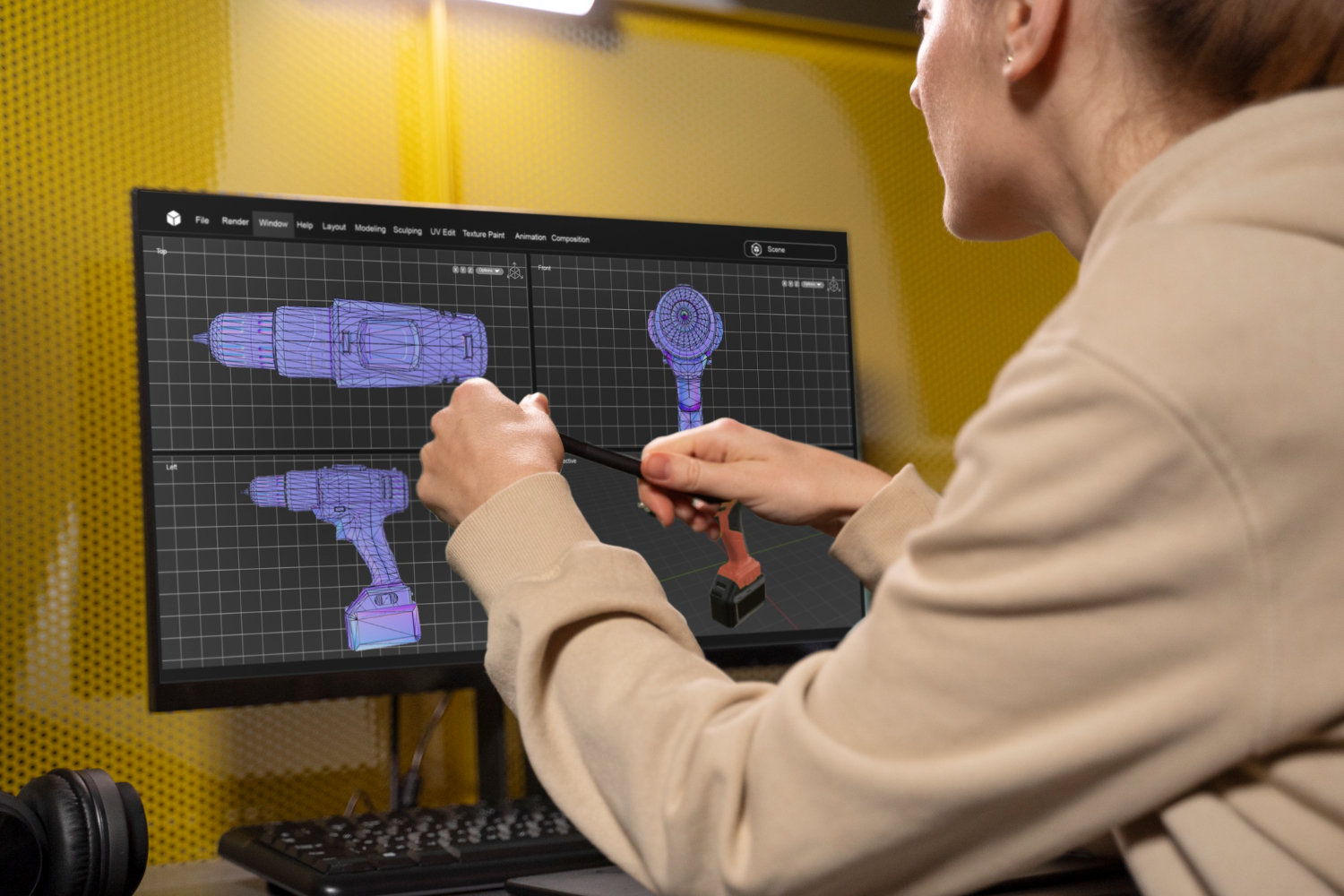
Design during the day, print overnight, test the next morning. A practical workflow for running rapid prototyping iterations at one per day.


Apr 8, 2026
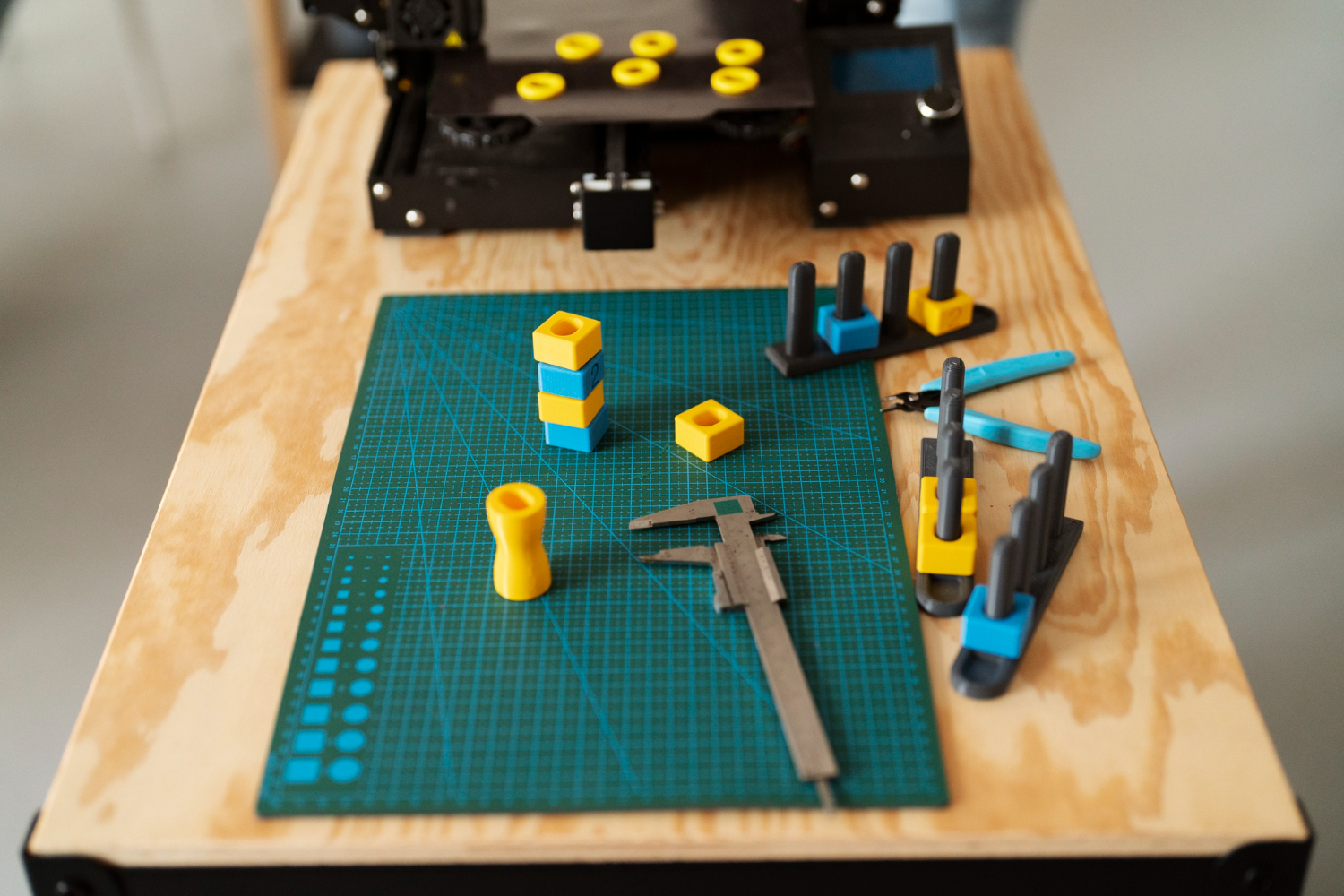
A structured checklist for testing 3D printed prototypes: visual inspection, fit testing, functional validation, and user testing. Get the most out of every iteration.
.webp)




Copyright © 3D On Demand