


Apr 8, 2026
3D Printed End-of-Arm Tooling: A Practical Guide for Manufacturers
What Is End-of-Arm Tooling and Why It Matters
End-of-arm tooling (EOAT) is the custom interface between your robot or automated system and the part or process it's handling. It's the gripper that picks components, the mount that positions a sensor, the cradle that holds a fragile assembly. EOAT is invisible to most people but directly determines whether your automation works reliably or becomes an expensive paperweight.
Traditional EOAT is machined from aluminum or built from standard pneumatic components bolted together. This approach has serious drawbacks: four to eight weeks lead time, €500–€5,000 per tool, and minimal iteration flexibility. If your gripper doesn't work perfectly the first time—and it rarely does—you're waiting weeks and paying thousands for redesigns.
3D printing changes this equation entirely. You can print a complete custom gripper, sensor bracket, or cable management system in three to five days for €50–€500. More importantly, you can iterate rapidly. If design #1 doesn't work, you print design #2 in parallel and test both. This flexibility alone is worth the switch.
Why 3D Printing Wins for EOAT
Speed. Traditional EOAT requires CAD, quotes, lead times, and quality inspection. 3D printing collapses this to design → print → test in under a week. For manufacturers running new product ramps or seasonal variants, this is transformative.
Weight. 3D printed EOAT can achieve 70–90% weight reduction compared to machined aluminum. Lighter tooling means faster robot cycles, lower inertial loads, longer servo lifespan, and higher throughput. A single gripper reduction from 8 kg to 1.5 kg can improve cycle time by 15–20% on high-speed pick-and-place operations.
Cost. Material and labor for a traditional machined EOAT gripper: €500–€3,000. A 3D printed equivalent: €100–€400. At volume, printed EOAT costs 1/5 to 1/10 of machined tooling.
Iteration freedom. Modify your gripper geometry, add a sensor mount, adjust clamping pressure—all in the CAD model. Print the next iteration while your team tests the previous one. This parallel iteration is impossible with traditional tooling.
Customization. Machining economically requires standardized designs. 3D printing economically enables one-off custom designs. Your gripper can be optimized for your exact part geometry, your exact mounting interface, your exact cycle time requirements.
Types of EOAT You Can 3D Print
Pneumatic and Electric Grippers
Grippers are the most common EOAT component. 3D printing excels here because you can integrate gripper fingers, mounting bosses, sensor pockets, and cable clips into a single lightweight assembly. Traditional pneumatic grippers are generic—your EOAT design adapts around them. 3D printed grippers are purpose-built—the gripper design adapts to your part.
Common designs: two-finger parallel grippers for rectangular parts, three-finger radial grippers for cylindrical parts, soft-grip fingers for delicate components, magnetic mounting interfaces for quick changeover.
Material recommendation: PA12 nylon for standard pneumatic grippers (handles pressure cycling). Carbon-fiber reinforced PA12 if you need higher stiffness without weight penalty. TPU (thermoplastic polyurethane) for soft gripper fingers—it's compliant, grips delicate parts without damage, and resists wear from repeated contact.
Suction Cup Mounts
Vacuum gripping is standard in electronics, packaging, and sheet material handling. The custom mount—the part that interfaces vacuum cups with your robot—is typically machined from aluminum or built from pneumatic tubing and fittings. 3D printing lets you integrate vacuum distribution galleries, one-way valves, and quick-disconnect interfaces into a single lightweight part.
Benefits: reduced weight (3 kg to 0.8 kg), integrated vacuum manifolds (fewer external connections), custom cup spacing (optimized for your exact part size), faster changeover (snap-fit instead of threaded connections).
Material recommendation: PA12 nylon reinforced with 15-20% carbon fiber for the vacuum manifold—it needs stiffness to avoid deflection under vacuum load. Standard PA12 for non-structural mounting features.
Sensor Brackets and Holders
Cameras, force sensors, proximity switches, and temperature probes are critical to modern automation, but mounting them precisely and adjusting their angle is tedious. 3D printed brackets solve this with integrated sensor pockets, angle adjustment features, and cable management.
A single printed bracket can replace five or six laser-cut steel plates and fasteners, reducing assembly time from 30 minutes to five minutes. You can also print test brackets to validate sensor positioning before committing to production designs.
Material recommendation: SLA resin or standard FDM for sensor brackets. Dimensional precision matters more than strength. Resin tolerances (±0.3mm) are superior to FDM (±0.5mm), and cost is similar.
Cable and Hose Management
Compressed air lines, electrical cables, and data lines routing from a robot's fixed structure to its end effector create drag, restrict motion, and complicate maintenance. 3D printed cable carriers integrate routing grooves, snap-fit cable clips, and bend radius bosses into a single lightweight structure.
Benefits: cleaner machine appearance (important for food and pharmaceutical), faster changeover (no tape and zip ties), reduced cable wear (guided routing prevents sharp bends), easier troubleshooting (cables always in the same path).
Material recommendation: PA12 nylon or PETG. Standard grades are sufficient—this is a containment application, not a load-bearing structure.
Part-Specific Cradles and Supports
For delicate or irregular parts, generic grippers don't work. Custom cradles that nest your exact part shape eliminate shifting, damage, and positioning errors. A 3D printed cradle can cost 1/10 the price of a custom aluminum fixture and iterate in days instead of weeks.
Common designs: electronics assembly cradles for circuit boards, automotive component nests for irregular stampings, optical part supports with integrated anti-reflection surfaces, medical device holders with vibration damping.
Material recommendation: PA12 for load-bearing structures. TPU for contact surfaces where protecting the part matters more than stiffness.
Material Selection for EOAT
PA12 Nylon (SLS): The workhorse for EOAT. Handles pressure cycling, temperature cycling, and mechanical stress. Resists common solvents and cleaning chemicals. Dimensionally stable across thousands of cycles. Cost: €2–€4 per gram. Lead time: 3–5 business days.
Carbon-Fiber Reinforced PA12: 40% higher stiffness than standard PA12, same cost per part (though material cost is higher). Use when you need to reduce deflection or increase fatigue life. Cost: €3–€5 per gram.
PETG (FDM): Lower cost than PA12, adequate stiffness for many applications, excellent chemical resistance. Best for non-critical EOAT or temporary prototypes. Cost: €1–€2 per gram. Lead time: 2–4 business days.
TPU (FDM): The soft gripper material. Compliant, wear-resistant, grips delicate parts without damage. Lower stiffness than PA12—use for fingers, pads, and contact surfaces only. Cost: €2–€3 per gram.
SLA Resin: Superior dimensional precision (±0.3mm vs. ±0.5mm for FDM). Use when sensor positioning or alignment tolerances are critical. Not suitable for high-load structural parts. Cost: €3–€6 per gram.
Real-World EOAT Efficiency Gains
Automotive assembly (e.g., door handle and window regulator installation): Traditional gripper tooling, €2,000–€4,000 per variant. 3D printed gripper, €200–€400. Lead time reduction: 6 weeks to 4 days. Three product variants on a typical platform = €5,400–€10,800 in saved tooling costs plus six weeks of accelerated time-to-production.
Food packaging (pick-and-place biscuits and confectionery): Suction gripper mounts traditionally require pneumatic manifold design and machining. 3D printing integrates the manifold directly into the mount, reducing weight by 60% and improving cycle time from 2.5 seconds to 2.1 seconds—a 16% throughput gain on a high-speed line.
Electronics assembly (handling PCBs and delicate components): Custom cradles and soft fixtures prevent solder joint cracking and ESD damage. 3D printed designs cost 1/8 of custom aluminum fixtures and can be optimized for each board geometry instead of forcing a one-size-fits-all approach.
Cost Comparison: Traditional vs. 3D Printed EOAT
Traditional machined aluminum gripper mount:
Design: €1,000–€2,000
Machining: €500–€2,000
Assembly + testing: €200–€500
Lead time: 4–8 weeks
Total cost per tool: €1,700–€4,500
3D printed EOAT (PA12):
Design: €300–€800 (same CAD work, but fewer revisions needed)
Printing + finishing: €50–€200
Assembly + testing: €50–€150 (faster due to fewer parts)
Lead time: 3–5 business days
Total cost per tool: €400–€1,150
The 3D printed option is 60–75% cheaper and arrives 3–4 weeks faster. If you need three variants or iterations, the gap widens dramatically.
European Manufacturing Context
Automotive: With modular platforms and frequent variant changes, 3D printed EOAT is critical for competitive time-to-market. German and Italian OEMs and Tier 1 suppliers use it extensively.
Food and Beverage Packaging: High-speed lines require lightweight, fast-changing EOAT. 3D printing reduces changeover from 2 hours to 20 minutes and enables product customization without tooling cost penalties.
Electronics Manufacturing: PCB handling, component placement, and test fixturing demand precision and quick iteration. 3D printing enables parallel prototyping of multiple gripper designs.
Medical Device Assembly: Regulatory requirements demand traceability and design documentation. 3D printed EOAT is fully documented, easily modified for process improvements, and fully reversible (no permanent tooling investment).
Getting Started With 3D Printed EOAT
Step 1: Document your current EOAT. What parts are you handling? What are the size, weight, and surface finish? What's your cycle time target? What environmental conditions (temperature, humidity, cleaning agents)?
Step 2: Identify your biggest EOAT pain points. Slow lead times? High cost for variants? Weight limiting cycle time? Design inflexibility?
Step 3: Partner with a 3D printing service that understands EOAT design. We can assess whether your current design can be directly printed or optimized for 3D printing. Most designs can be improved—lighter, cheaper, and faster—with minor modifications that don't affect function.
Step 4: Prototype rapidly. Print iteration #1, test it, print iteration #2 in parallel. Traditional tooling forces sequential iteration. 3D printing enables parallel iteration, compressing your optimization cycle from weeks to days.
Our team has designed and printed EOAT for dozens of European manufacturers. We understand the automation landscape, the material requirements, and the iterative design process. We can take your sketches, your measurements, or your existing designs and deliver production-ready tooling in days.


Apr 8, 2026
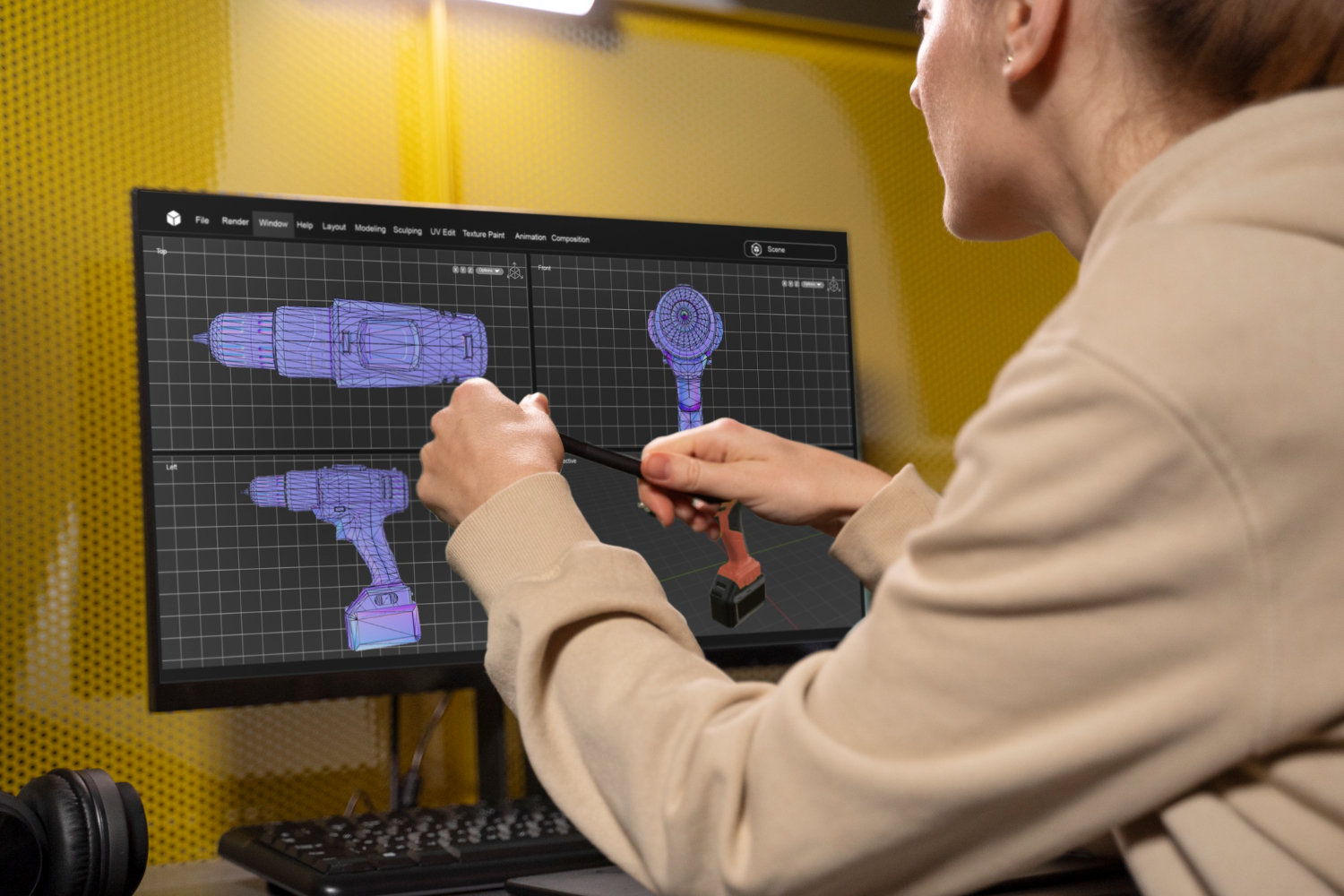
Design during the day, print overnight, test the next morning. A practical workflow for running rapid prototyping iterations at one per day.


Apr 8, 2026
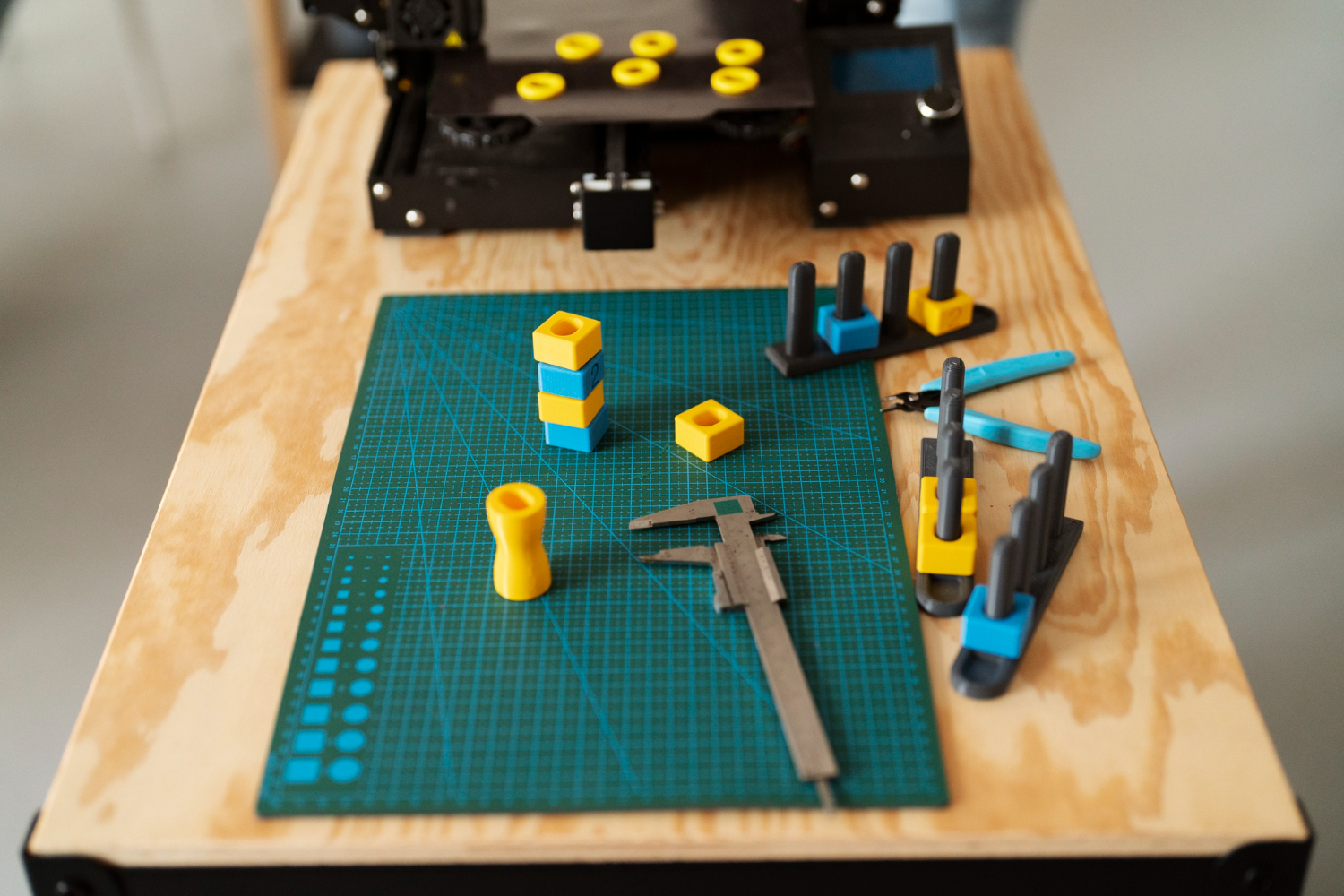
A structured checklist for testing 3D printed prototypes: visual inspection, fit testing, functional validation, and user testing. Get the most out of every iteration.
.webp)




Copyright © 3D On Demand