


.webp)
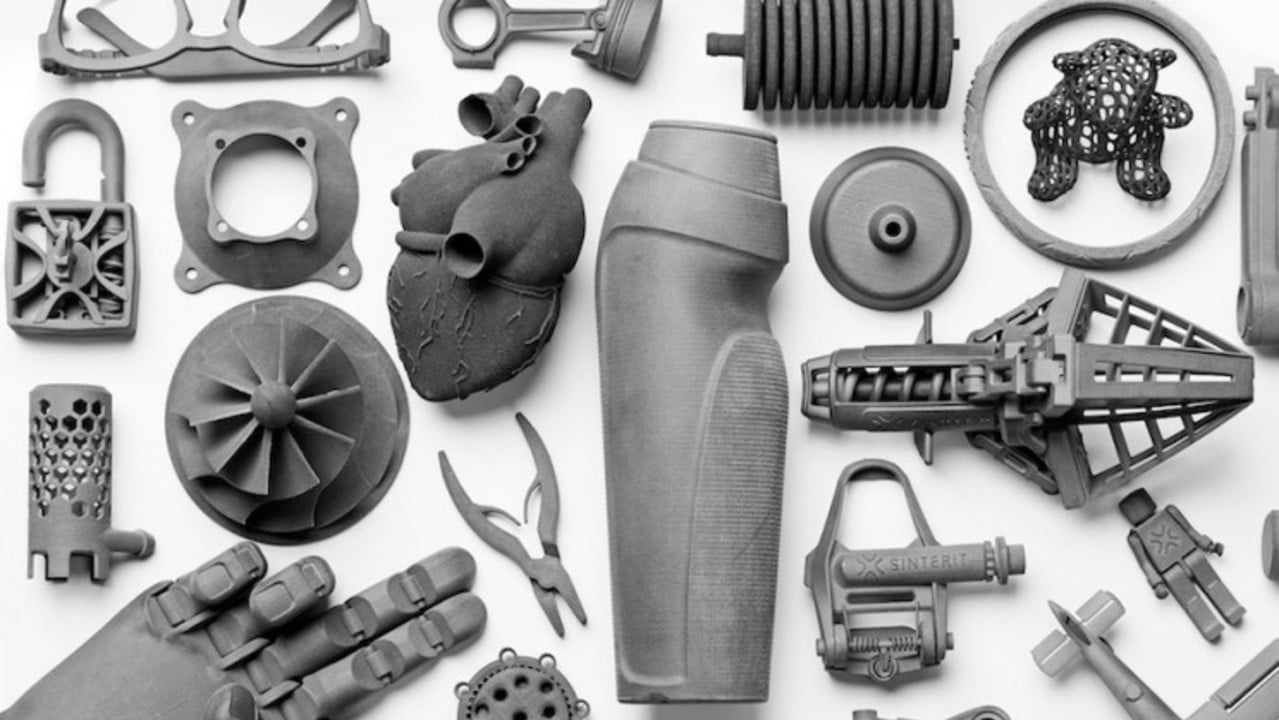
Germany is Europe's heavyweight in additive manufacturing. With a market valued at roughly €2.4 billion in 2025 and a projected compound annual growth rate of 20.6% through 2033, 3D printing in Germany is no longer a niche topic — it is a core part of how the country develops products and produces parts. From Stuttgart to Munich, Hamburg to Berlin, German engineers, product designers and procurement managers are looking for 3D printing services that are fast, precise and predictable. That is exactly the gap 3D On Demand fills with an industrial on-demand service that ships to Germany from neighbouring IJmuiden in the Netherlands — typically within 3–5 working days.
This guide explains why Germany is one of the most important global markets for additive manufacturing, which technologies and materials suit which application, and what to look for when choosing a 3D printing partner.
Germany ranks third in the world for installed industrial 3D printers, behind only the United States and the United Kingdom. According to Germany Trade & Invest, around 44% of German industrial companies with more than 100 employees already use 3D printing technologies, and another 20% are planning to adopt them in the near future. That makes Germany Europe's number one market for industrial additive manufacturing.
This position is no accident. German pioneers such as EOS GmbH, SLM Solutions and Trumpf shape the global market for metal and polymer 3D printing machines. At the same time, the Formnext trade fair in Frankfurt and Rapid.Tech 3D in Erfurt anchor an ecosystem with worldwide reach. A recent VDMA industry survey for 2026 also shows that the industry is stabilising after a correction phase, with serial production gaining further weight: 76% of surveyed companies expect market growth over the next two years.
The German industrial base is broad — and the use cases for industrial 3D printing are correspondingly varied. Five sectors drive most of the demand:
From a functional prototype of a new connector housing to assembly fixtures and even spare parts for classic-car restoration: OEMs and tier-1 suppliers now deploy 3D printing across the whole value chain. Demand for rapid prototyping of vehicle components, electronic enclosures and interior parts is especially strong in southern Germany around Stuttgart, Ingolstadt and Munich. Our Engineering & Industrial solutions cover exactly these applications, from custom jigs and fixtures to end-of-arm tooling.
German mechanical engineering thrives on special-purpose machines, small batches and long spare-part availability — all areas where 3D printing shines: consolidated parts, lighter structures, shorter lead times than subtractive methods. A comparative analysis by 3D Printing Industry forecasts that 2026 will see a clear shift from pure prototyping toward end-use parts, tooling and fixtures.
Patient-specific models, surgical planning aids, drill guides and dental models are now staples of modern clinics and labs. For German users active in dental 3D printing or medical device manufacturing, biocompatible resins, high-resolution SLA prints and reproducible quality are essential. 3D On Demand serves these applications through its Medical & Dental services.
Urban planning offices in Berlin and Hamburg and architecture practices in Frankfurt now use 3D printing for competition models, high-detail facade studies and presentation pieces. SLA's accuracy combined with FDM's speed makes it possible to deliver an entire city block at 1:500 scale in just a few days. Detailed material and scale options are listed under Architecture & Scale Models.
German hardware startups — from Berlin and Munich to Aachen — develop in ever-shorter iteration cycles. If you want to test a functional prototype each sprint, you need a partner with reliable online quoting and short lead times. The Product Design & Prototyping offering covers volumes from 1 to 500 parts and slots neatly into agile product workflows.
One of the most frequent questions from German buyers and engineers is: which process is the right one for my part? Here is a practical overview.
FDM (Fused Deposition Modeling) is the most cost-effective process for robust, larger parts. It works well for concept models, fixtures, enclosures and functional prototypes in materials such as ABS, PC, PETG and carbon-fibre-reinforced nylon. See the FDM 3D Printing page for further details and applications.
SLS (Selective Laser Sintering) produces high-strength, isotropic parts in PA12 nylon — without support structures and with the typical slightly grainy SLS surface. Ideal for complex geometries, small- and mid-volume batches, and functional end-use parts. A deeper introduction is available at SLS 3D Printing.
SLA (Stereolithography) is the first choice when fine detail, smooth surfaces and tight tolerances matter — for visual models, dental and jewellery applications, or injection-moulding pre-series. Material and tolerance specs are summarised at SLA 3D Printing.
MJF (Multi Jet Fusion) complements the portfolio where SLS-like properties meet even better repeatability and faster throughput — particularly for batches between 50 and 500 parts.
The rule of thumb: prototyping leans toward FDM or SLA; production volume leans toward SLS or MJF. When in doubt, request a short design review — at 3D On Demand, engineers check every CAD file for printability before production and suggest adjustments where useful.
German procurement teams are demanding, and rightly so. Three metrics typically decide the choice of 3D printing partner:
1. Lead time. Standard orders at 3D On Demand leave production within 3–5 working days. If you are in a rush, express production with next-business-day dispatch is available. Shipping to Germany runs through established couriers, usually adding 1–2 working days of transit.
2. Tolerances. Realistic expectations save frustration: SLS and MJF typically achieve ±0.3 mm or ±0.3% (whichever is greater), SLA ±0.1–0.2 mm, FDM ±0.3–0.5 mm. Tighter tolerances are possible but should be flagged explicitly in the CAD file.
3. Post-processing. From support removal to sanding, dyeing, vapor smoothing and assembly of multi-part components, all common finishing options are available. SLS and MJF nylon parts can be dyed in several standard colours.
Sourcing 3D-printed parts in Germany is now largely digital. The online quoting tool at 3D On Demand accepts STEP, STP, STL, OBJ, 3MF and IGES files, calculates pricing within minutes, and automatically factors in volume, material, resolution and post-processing. For confidential projects — for example, new consumer goods or components for automotive or medical devices — NDAs are signed on request before any file is uploaded. GDPR-compliant file storage and limiting access to the production team only are standard.
For German business customers, payment options include credit cards, bank transfers and invoice payment after a credit check. Larger recurring orders can be arranged under custom payment terms or frame contracts.
Three developments stand out for the German market in 2026.
First, the focus is shifting from pure prototyping to serial production with additive processes. The market analysis by Mordor Intelligence forecasts that end-use parts, spare parts and tools will increasingly be produced additively.
Second, local, decentralised supply chains are gaining importance. After the experience of the pandemic and recent geopolitical disruption, German companies are turning to European on-demand partners rather than overseas supply chains. The geographical proximity of the Netherlands — with just 1–2 days of transit to Frankfurt, Düsseldorf or Hamburg — has become a real competitive advantage.
Third, sustainability plays an ever-larger role. Additive manufacturing produces significantly less material waste than subtractive methods. Lighter, topology-optimised structures also generate savings over the full lifetime of a product — an argument that carries weight in both the German automotive industry and aerospace.
Germany remains one of the most exciting markets for additive manufacturing in Europe — supported by a strong industrial base, a dense network of research institutions, and rapidly growing adoption in the Mittelstand. German engineers, buyers and founders who need parts in industrial quality and at short notice no longer have to search far: a modern on-demand service can deliver prototypes or short-run production within a few working days, right to the shop-floor door.
3D On Demand combines eight years of experience with the four main industrial processes (FDM, SLS, SLA, MJF), transparent online quoting and logistics that reliably reach Germany. If you have a concrete project, the fastest path is to upload your CAD file and receive a binding quote in minutes — or to contact the team for a consultation.
Get a no-obligation quote now: Start your 3D printing request
For more development-focused content — such as designing 3D-printed enclosures for electronics, running a 24-hour design sprint, or comparing 3D-printed fixtures versus CNC machined — see the 3D On Demand blog.

.png)
.webp)

.png)
3D Print Instant quote
Upload your CAD file through our secure portal. Our system analyzes your geometry and provides an instant quote with material and finishing options.
Production & Quality
Our engineers review your file, select the optimal print orientation, and produce your parts using industrial-grade 3D printers with rigorous quality checks.
Shipping & Support
Orders ship within 3–5 business days. Need it faster? Choose express production for next-day dispatch. We support you from first print to final delivery.


Copyright © 3D On Demand


