


Apr 8, 2026
Rapid Prototyping vs Traditional Manufacturing: Cost and Time Comparison
Manufacturers face critical decisions when transitioning products from prototype to production. Should you invest in traditional manufacturing infrastructure like injection molds and CNC tooling, or leverage rapid prototyping technologies for short-run production? The answer depends on production volume, timeline, complexity, and cost. This comprehensive analysis helps you evaluate rapid prototyping against traditional manufacturing methods, enabling informed decisions that optimize cost and time-to-market.
Manufacturing Method Overview
Rapid Prototyping (3D Printing)
Rapid prototyping encompasses FDM, SLA, and SLS technologies enabling direct fabrication without tooling. Parts print directly from digital files. No molds, dies, or specialized fixtures required. Technology is largely independent of part complexity; intricate geometries cost no more than simple parts. Setup is instantaneous; parts print hours after file submission. Production can begin immediately with zero lead time.
CNC Machining
Computer numerical control (CNC) subtractive manufacturing removes material from solid blocks to create parts. CNC serves as the bridge technology for short-run production and prototyping. Minimal tooling required compared to injection molding. Lead times measured in days to weeks. Cost scales with part complexity due to tool paths and machine time. CNC excels for metal parts and high-precision requirements demanding tight tolerances.
Injection Molding
Injection molding dominates high-volume manufacturing with exceptional economics at scale. Custom molds represent significant upfront investment, often 10,000 to 100,000 dollars depending on complexity. Once amortized across production volume, per-unit costs become minimal. Lead times for mold creation span weeks to months. Injection molding requires minimum production runs (often 5,000 to 50,000 units) to justify mold cost.
Cost Analysis: Per-Unit Economics
Rapid Prototyping Cost Structure
3D printing costs consist primarily of material and machine time. Material costs are modest: PLA and PETG cost approximately 5-15 dollars per kilogram. Resin materials like standard resin cost 20-40 dollars per liter. PA12 from SLS costs 30-50 dollars per kilogram. Service pricing typically ranges from 50 dollars to 500 dollars per part depending on size, material, and volume.
Critically, rapid prototyping has virtually no fixed costs or tooling investment. The first part costs the same as the thousandth part from a per-unit perspective. This makes rapid prototyping exceptionally economical for low-volume production (1-500 units).
CNC Machining Cost Structure
CNC machining combines setup costs, tool costs, and per-unit machine time. A simple plastic part might cost 100-500 dollars to machine. Aluminum or steel increases costs to 200-1,000 dollars per unit. Tool changes and setup cost 50-200 dollars per run. For small production runs, setup costs dominate total cost.
CNC becomes economical around 50-200 unit volumes when setup costs are amortized across production runs. Below this range, per-unit costs remain high. Above this range, simpler manufacturing methods often prove more economical.
Injection Molding Cost Structure
Injection molding presents inverted economics: massive upfront tooling investment with minuscule per-unit costs. Complex molds cost 15,000 to 100,000 dollars or more. Simple molds might cost 5,000 to 10,000 dollars. Once amortized, per-unit manufacturing costs drop to 1-10 dollars per unit for moderate complexity parts.
The break-even analysis reveals: at what volume does injection mold investment justify itself? For a 50,000-dollar mold and 2-dollar per-unit manufacturing cost, you need 25,000 units to equal 100,000-dollar total cost before profit margin. This explains why injection molding requires minimum runs of 5,000-50,000 units.
Cost Comparison: Practical Examples
Example 1: Consumer Product Part (250 unit requirement)
Suppose you need 250 identical plastic parts for a consumer product. Cost comparison:
Rapid Prototyping: 250 parts at 80 dollars per part = 20,000 dollars total cost.
CNC Machining: 250 parts at 150 dollars per part = 37,500 dollars total cost.
Injection Molding: 30,000-dollar mold plus 2 dollars per part (250 units) = 30,500 dollars total cost.
At 250 units, rapid prototyping is most economical. The mold investment doesn't justify itself; you'd need higher volumes for injection molding cost advantage.
Example 2: Metal Component (500 unit requirement)
A steel component requires precision and material properties unavailable from plastics.
CNC Machining: 500 units at 300 dollars per part = 150,000 dollars total cost.
Machining + Injection Molding Alternative: Not viable for steel.
For metal parts below 1,000 units, CNC machining typically represents the most economical approach. Traditional manufacturing (forging, stamping) only becomes economical above 10,000+ unit volumes.
Example 3: High-Volume Consumer Product (100,000 unit requirement)
Large-scale production favors traditional manufacturing.
Rapid Prototyping: 100,000 units at 80 dollars per part = 8,000,000 dollars total cost. Impractical.
Injection Molding: 50,000-dollar mold plus 2 dollars per unit = 50,000 + 200,000 = 250,000 dollars. Highly economical.
At 100,000 units, injection molding is overwhelmingly superior. The 50,000-dollar mold investment is negligible at scale.
Time-to-Market Analysis
Rapid Prototyping Timeline
3D printing enables remarkable speed. Design completion to first physical part: 1-3 days. Iteration to revised design: 1-3 days. Rapid prototyping enables parallel development: print multiple design variations simultaneously for comparison. Time-sensitive products benefit dramatically. A product needed in 2 weeks uses rapid prototyping. A product launch delayed for traditional tooling risks market opportunity loss.
CNC Machining Timeline
CNC production adds 2-4 weeks lead time. Tool path generation and programming require 1-2 weeks. Setup and first article inspection require 1-2 weeks. This is faster than traditional manufacturing but slower than rapid prototyping. CNC suits projects with moderate time pressure but requiring material properties or precision unavailable from 3D printing.
Traditional Manufacturing Timeline
Injection mold creation requires 4-12 weeks depending on complexity. Mold design, manufacturing, testing, and validation consume substantial time. Once molds are ready, production is fast. But project initiation to first production part spans months. This is only acceptable for projects with long development timelines or where time-to-market is less critical than production cost.
Complexity and Design Freedom
Rapid Prototyping Advantages
3D printing excels with complex geometries impossible or expensive with traditional manufacturing. Internal channels, organic shapes, intricate mechanical features cost no more than simple geometries. Undercuts, overhangs, and complex nesting are free. This design freedom enables innovation impossible with traditional manufacturing constraints.
CNC Limitations
CNC machining requires designs compatible with subtractive cutting operations. Undercuts complicate milling. Complex internal features increase cost dramatically. Certain geometries become expensive or impossible. Designs optimized for CNC are often simpler, less capable than designs optimized for additive manufacturing.
Injection Molding Constraints
Injection molding requires draft angles, avoidance of undercuts, and consideration of mold manufacturing processes. Design freedom is constrained by mold creation methods. Changes to molds are expensive, making design iteration costly during production. This encourages design finalization before mold investment, reducing innovation.
When Rapid Prototyping Wins
Rapid prototyping is optimal for:
Low-Volume Production: 1-1,000 units where tooling investment doesn't justify itself.
Custom, One-Off Parts: Single prototype or handful of variations.
Time-Sensitive Projects: When speed-to-market is critical; 2-week projects beat 8-week traditional timelines.
Complex Geometries: Parts with organic shapes, internal channels, or intricate features where design freedom is valuable.
Design Iteration: Products still evolving; rapid prototyping enables quick changes without expensive re-tooling.
Small Batch Production: Manufacturing 50-500 units for niche markets or limited editions.
When Traditional Manufacturing Wins
High-Volume Production: 10,000+ units where traditional manufacturing's per-unit cost advantage overwhelms initial tooling investment.
Metal Requirements: Parts needing material properties exclusive to metals; 3D printed metals are limited and expensive.
Aesthetic Requirements: Surface finish and appearance specifications demanding traditional manufacturing's refined production.
Long Product Life: Multi-million unit lifespans where cost per unit justifies massive tooling investment.
Established Markets: Mature products with stable designs; no design iteration expected.
The Hybrid Approach: Best of Both Worlds
Many manufacturers use hybrid strategies leveraging both technologies optimally:
Rapid Prototyping for Development: Use 3D printing for design iteration and prototype validation. Evaluate multiple design variations quickly. Refine designs through iterative printing.
CNC for Short-Run Production: Once design is finalized, use CNC machining for initial production runs (50-500 units) while verifying market demand and gathering customer feedback.
Tooling Only at Scale: Invest in injection molds only after confirming demand through CNC production runs. Reduce risk of expensive tooling for unproven products.
This phased approach optimizes cost and time. Rapid iteration reduces risk. CNC bridges prototype to production. Tooling investment only occurs after validating demand. For product design prototyping, this hybrid strategy often delivers optimal results.
Evaluating Your Specific Project
Consider these questions to determine optimal manufacturing approach:
Production Volume: How many units do you need? Under 1,000 units almost always favors rapid prototyping. 1,000-10,000 units might justify CNC. Over 10,000 units likely justifies traditional tooling.
Timeline: How quickly must you launch? Rapid prototyping enables 2-4 week launches. Traditional manufacturing requires 2-3 month timelines.
Material Requirements: Can plastic parts meet requirements? 3D printing excels with plastics. Metal requirements favor CNC or traditional manufacturing.
Design Maturity: Is design finalized or still evolving? Evolving designs favor rapid prototyping. Mature designs favor tooling investment.
Performance Requirements: Do parts require specific material properties, surface finishes, or tolerances? Demanding specifications might require traditional manufacturing.
Cost Sensitivity: How cost-sensitive is your market? Mass-market products need traditional manufacturing. Niche, premium products tolerate rapid prototyping costs.
Decision Framework: Rapid Prototyping vs Traditional Manufacturing
Use this decision matrix:
Choose Rapid Prototyping if: Units needed < 1,000. Timeline < 8 weeks. Design still evolving. Plastic materials acceptable. Willingness to prioritize speed over per-unit cost.
Choose CNC Machining if: Units needed = 50-2,000. Metal materials required. Tight tolerance specifications. Design finalized. Months available for production.
Choose Injection Molding if: Units needed > 5,000. Cost per unit critical for competitiveness. Design finalized and locked. Months available for tooling and production.
Leveraging 3D Printing Services
Our on-demand 3D printing services make rapid prototyping accessible without capital investment in equipment. Submit digital files, receive finished parts. This democratizes rapid prototyping, enabling startups and established manufacturers to leverage 3D printing without ownership overhead.
Contact us at our contact page to discuss your manufacturing requirements. We can help evaluate whether rapid prototyping or traditional manufacturing is optimal for your specific project. We provide expert guidance on comparing different 3D printing technologies and understanding 3D printing costs.
The optimal manufacturing strategy depends entirely on your specific requirements. Understanding the trade-offs between rapid prototyping and traditional manufacturing enables informed decisions that minimize cost, reduce time-to-market, and ultimately deliver superior business outcomes.



Apr 8, 2026
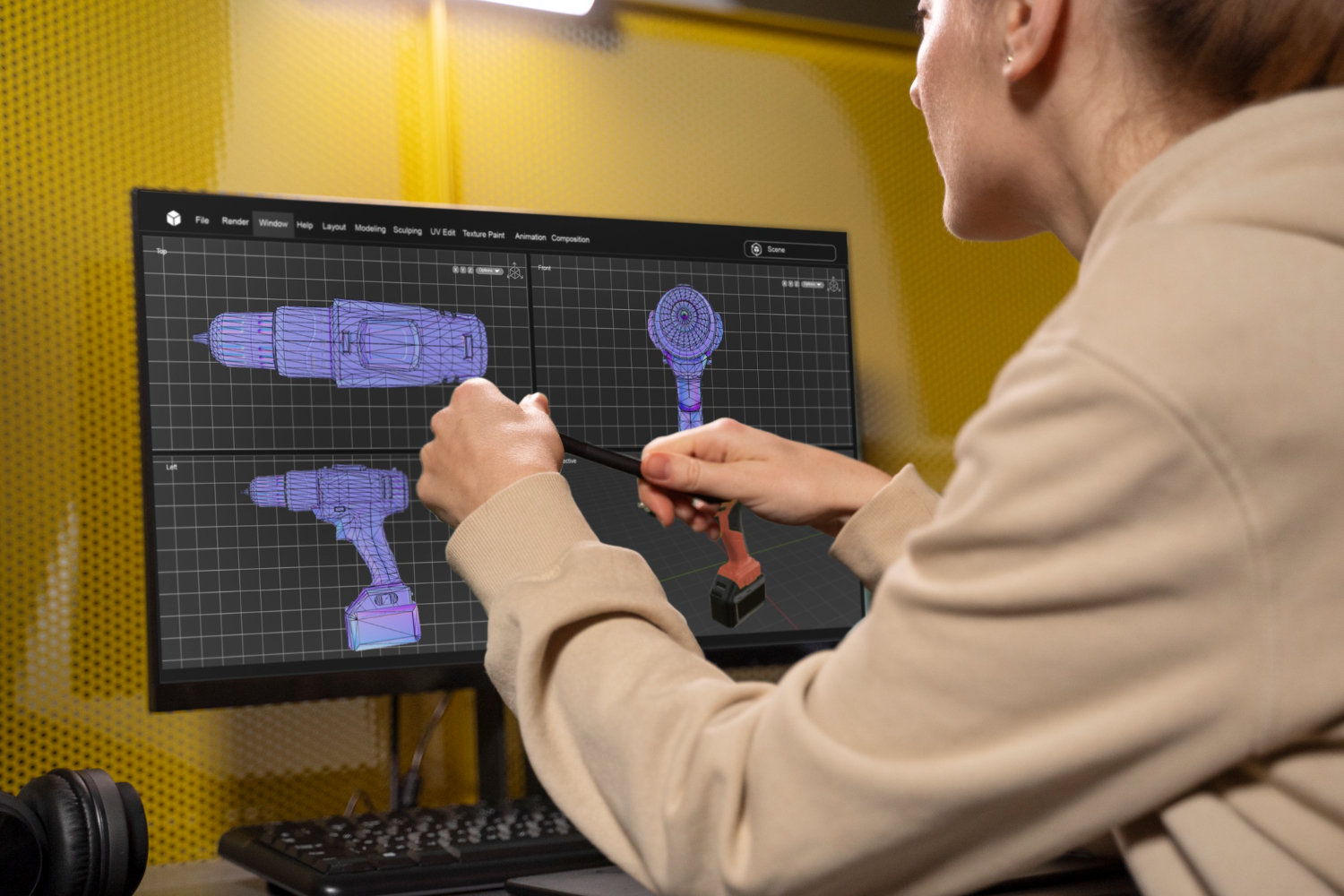
Design during the day, print overnight, test the next morning. A practical workflow for running rapid prototyping iterations at one per day.


Apr 8, 2026
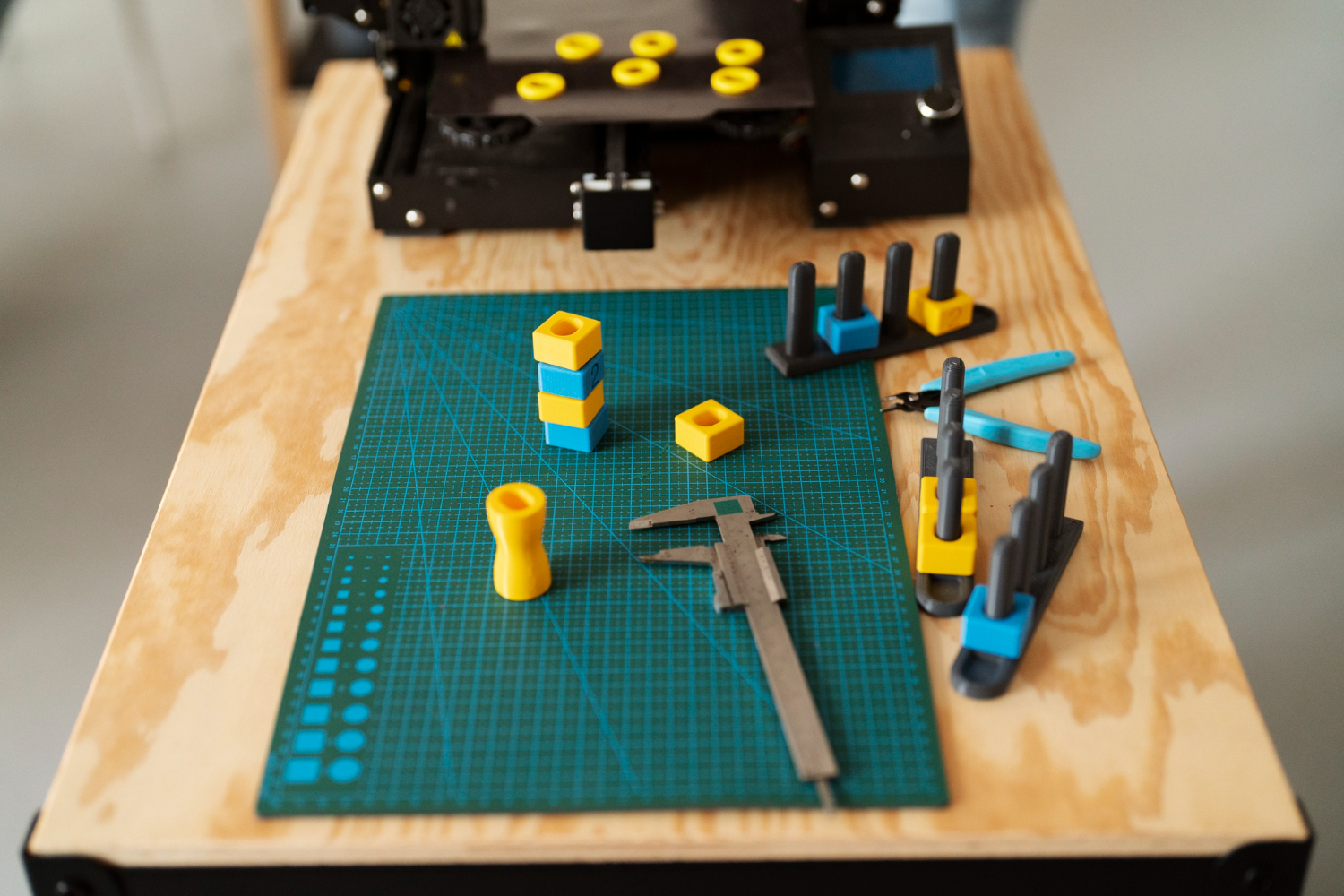
A structured checklist for testing 3D printed prototypes: visual inspection, fit testing, functional validation, and user testing. Get the most out of every iteration.
.webp)





Copyright © 3D On Demand