


Apr 8, 2026
3D Printing for Maintenance Teams: An Operations Manager's Guide
Every operations manager knows the pain: a machine breaks. The replacement part costs €800. The OEM lead time is 4–6 weeks. Meanwhile, the machine is dark. Production is down. Your team is scrambling to work around the failure or renting temporary equipment. The part finally arrives, maintenance installs it, and you're back online—three weeks behind schedule.
Or worse: the part is discontinued. The OEM offers a newer version that might work, or suggests an expensive redesign. You end up buying a replacement machine because the alternative is too disruptive.
This is where 3D printing enters the conversation. Not as science fiction, but as a practical tool for your maintenance toolbox. If you can get a CAD file or a physical sample of that broken part, we can print a replacement in 2–5 days for a fraction of the OEM cost and no minimum order. Let's walk through how to make this work in your operation.
The Pain Points: Why Maintenance Teams Need a Better Solution
Let's be specific about where traditional MRO (maintenance, repair, operations) falls short:
Long Lead Times from OEMs: Standard lead time for OEM parts: 2–8 weeks, sometimes longer for specialized equipment. This assumes the part is in stock and the OEM hasn't discontinued it. If you need the part now, you're stuck. Renting replacement equipment or paying rush fees to expedite shipping can exceed the part's original cost.
Minimum Order Quantities: OEMs often require orders of 5 or 10 units minimum. You need one part. You buy ten, storing nine for maybe 3–5 years until another unit fails. Your warehouse becomes a graveyard of parts that may never be used. Capital tied up in inventory that doesn't move.
Discontinued Parts: Equipment ages. After 7–10 years, OEMs discontinue spare parts. You're told "that model is legacy; we recommend upgrading to the new system." Except your current system works fine; you just need one replacement belt, bearing, or bracket. Now you're pressure to buy €50,000 in new equipment to replace a €200 part.
Overstocked Warehouses: In response to long lead times, maintenance managers over-order common parts. You end up storing expensive components with high inventory carrying costs, obsolescence risk, and warehousing waste. Space that could be used productively is consumed by parts you hope never to need.
Supplier Dependency: You're entirely dependent on the OEM's supply chain, pricing, and availability. If they're having manufacturing problems, you're collateral damage. If they raise prices, you have no alternative.
3D printing doesn't solve all of these overnight, but it transforms the economics and timeline for the parts that matter most: brackets, guides, clips, covers, and housings. Any part that isn't a precision bearing, motor, or high-temperature component can likely be printed.
How 3D Printing Fits Into Your MRO Workflow
The process is straightforward. No special skills required—mostly just a change in mindset about where parts come from.
Machine breaks. Maintenance team identifies what's damaged. This is already happening in your current workflow.
There are two paths:
Work with the service bureau to confirm material. What was the part originally made from? If it was plastic, we likely print in
Your part ships in 2–5 business days (depending on complexity and current queue). Most parts arrive quicker than express shipping from overseas suppliers.
Maintenance team installs the printed part. Machine comes back online. Zero downtime beyond the print and ship time (which happens while your machine was already down).
If the part performs perfectly, great. If it needs minor refinement (slightly tighter tolerance, reinforced wall, different material), you've already iterated faster than traditional lead times would allow for a second attempt. Print a revised version. Most parts are perfect on the first try.
That's it. No minimum orders. No tooling costs. No capital equipment purchase. The barrier to entry is just: do you have a file or a broken sample?
What You Need to Get Started: It's Just a File
The only requirement is CAD geometry. Here's how to gather it:
Check your equipment manual or the original supplier documentation. Many manufacturers include STEP or DWG files with technical manuals (especially for industrial equipment). A 30-minute hunt through your records might find the exact file you need.
Email the manufacturer and request a CAD file or engineering drawing for the part number. Even if they won't ship the part (discontinued, long lead time), most will provide documentation. Reference the equipment model and part ID. Many OEMs will respond within 2–3 business days.
You have the broken part or an old spare. Send it to a service bureau. They'll 3D-scan it (if it's accessible) or carefully measure and model it. Cost: typically €100–300 for scanning + verification. Timeline: 5–7 days.
If the part is simple geometry (a bracket, a guide rail, a cover), detailed photos (top, bottom, side, with something for scale) can be enough. A service bureau engineer can sketch CAD from good photos. This is fastest if the part is straightforward.
For 90% of parts your maintenance team encounters, one of these four approaches will work.
The Business Case: Calculating Downtime Costs
To justify 3D printing to finance or procurement, build a simple model. You don't need perfection—directional accuracy is enough to make the case.
Example: Food Processing Line
A conveyor guide rail cracks. The part costs €150 from the OEM. Lead time: 4 weeks. During those 4 weeks, the line runs at reduced speed (missing pieces on the conveyor, or using a temporary workaround). This reduces output by 20%.
Your production value: €2,000 per day. 4 weeks × 5 days/week × €2,000 = €40,000 in lost production value. Even with a 50% efficiency/recovery factor (you can partially work around the problem), that's €20,000 in lost revenue.
Cost to 3D-print the part: €200–300 (material + service bureau fee). Turnaround: 5 days.
If 3D printing gets you back to full operation in 5 days instead of 28, you've saved 23 days of downtime. At €2,000/day in production value, that's €46,000 in recovered revenue. Cost of printing: €300. ROI: 15,000%.
That's not hyperbole. For high-volume or high-value production equipment, the ROI on printing a critical part is enormous.
Example: Specialty Machinery (Lower Volume)
A precision lab instrument has a cracked sample holder bracket. Equipment is critical but used 1–2 hours daily. Cost of OEM part: €200. Lead time: 6 weeks. During those 6 weeks, the lab can work around it or use a borrowed unit (if available).
Lost opportunity value: modest (maybe €50–200 in research delays or equipment rental). Cost to 3D-print: €150–200. Turnaround: 5 days.
ROI is lower here, but you still save on downtime, avoid renting temporary equipment, and maintain your normal operations. The business case is: €150 now beats €200 + 6 weeks of delays.
The pattern is clear: for any part where downtime has a meaningful cost, 3D printing is the better choice. The only exception is if the part is so cheap and the spare is already on your shelf—then you're solving a problem that doesn't exist. But for parts that require waiting, 3D printing pays for itself immediately.
Building the Process Into Your Maintenance Workflow
Here's how to formalize this so your team uses it:
Work with your maintenance team to list parts that frequently break or are hard to source. Brackets, guides, connector blocks, covers, clips—the non-critical structural parts that fail but can be printed. You'll probably identify 10–20 parts that appear on your replacement shopping list every 12–24 months.
For the top 5–10 candidates, invest in getting CAD files now while there's no emergency. Send a note to the OEM asking for files. Hunt through your documentation. Reverse-engineer from spares using photos or scanning. This takes 2–4 weeks of administrative work, but you'll have a library ready.
Partner with a local 3D-printing service bureau. Get quotes. Confirm lead times (usually 5–7 business days for standard parts). Build a relationship so when you need a rush job, you can get it in 3 days. We recommend this approach—having a known partner beats searching for a new vendor every time you need a part.
When a part breaks, your maintenance technician should ask:
- Is the OEM lead time longer than 2 weeks?
- Is the part cost under €500?
- Is there a CAD file or can we get a sample?
- Is downtime costly enough to justify expedited options?
If the answer to 2+ of these is yes, print it instead of ordering from the OEM.
For each part printed, note: original OEM cost, OEM lead time, 3D-print cost, 3D-print turnaround, and downtime avoided. After 6 months, you'll have data showing how much money and time you've saved. This validates the approach and helps your team internalize the option.
Getting Buy-In from Procurement and Engineering
Procurement teams are often skeptical of new suppliers and non-traditional sourcing. Here's how to address their concerns:
The key is positioning this as a risk mitigation strategy, not a cost-cutting measure. You're reducing downtime risk and supply chain risk by having a local, fast alternative to OEM suppliers.
Real Example: Textile Equipment Heddle Replacement
A European textile mill's weaving machine needed replacement heddles (the wire guides that control warp tension). The heddles were from a British OEM, had a 6-week lead time, and cost €18 per unit (minimum order of 100 = €1,800).
The mill was out of stock and had a broken heddle slowing production. They contacted 3D-Demand with photos and a broken sample.
Traditional Path: Order 100 heddles for €1,800, wait 6 weeks, store the 99 spares until the next failure (maybe 18 months later or never).
3D Printing Path: Reverse-engineer from sample (€200). Print 20 test heddles in Nylon PA-12 (€120 + service fee). Deliver in 5 days. Test on machine (1 day). Adjust design slightly if needed (re-print in 3 days if necessary). Once validated, order additional units in batches of 5–10 as needed.
Outcome: First batch of 20 cost €400 total. All worked perfectly. The mill now orders heddles in batches of 10 every 6–8 months as they wear, paying ~€20 per unit. They've reduced inventory from 100 spares to 10, freed up warehouse space, and eliminated the OEM minimum order constraint. Capital savings over 3 years: ~€1,200 (cost difference between bulk order and as-needed printing).
Starting Small: Pick 5–10 Parts to Test
Don't try to overhaul your entire MRO process at once. Pick a small set of parts and test the workflow:
This approach is low-risk. If it doesn't work, you've invested a few hundred euros and learned something. If it works, you've found a permanent improvement to your maintenance operations.
Final Thought: Control Your Supply Chain
Every maintenance manager dreams of not being dependent on OEM lead times and pricing. 3D printing gives you that power for a meaningful portion of your spare parts inventory. You go from months of waiting and forced bulk orders to days and small batches. You regain control.
Whether you're managing a food processing line, textile mill, automotive plant, or specialty equipment, the principle is the same: identify the parts that cause downtime, get them printed locally, and break your dependency on distant suppliers with long lead times.
Ready to start? Contact us with details on a part your team needs. We'll help you gather CAD, discuss material options, and provide a quote. If your maintenance operation involves a lot of custom or legacy equipment, we can also discuss reverse engineering and building a digital inventory of critical parts. Let's reduce your downtime together.


Apr 8, 2026
Design during the day, print overnight, test the next morning. A practical workflow for running rapid prototyping iterations at one per day.


Apr 8, 2026
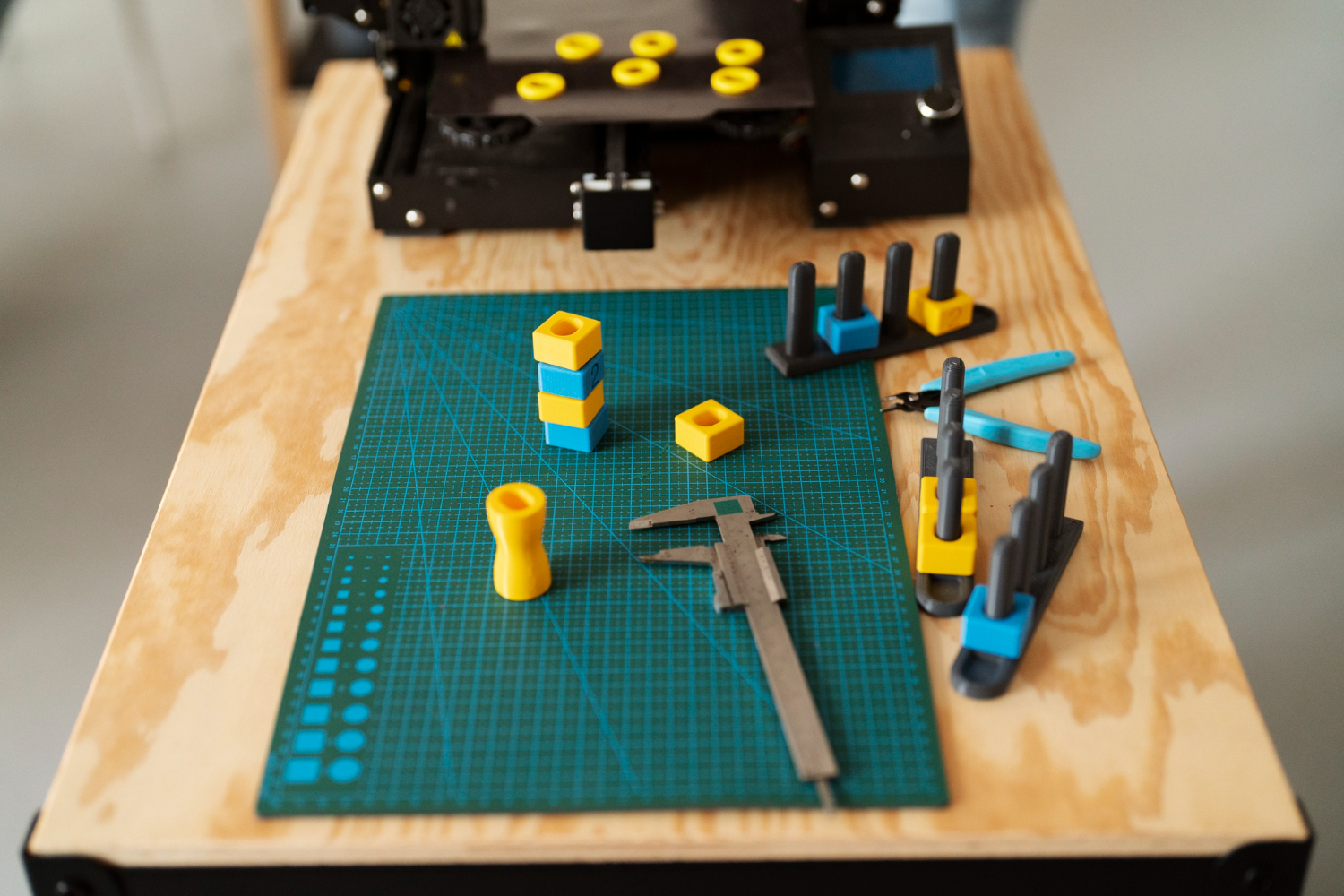
A structured checklist for testing 3D printed prototypes: visual inspection, fit testing, functional validation, and user testing. Get the most out of every iteration.
.webp)




Copyright © 3D On Demand