


Apr 8, 2026
Reverse Engineering Broken Parts with 3D Printing: A Step-by-Step Workflow
When You Need Reverse Engineering
You have a broken or worn part. The original manufacturer stopped production five years ago. The OEM replacement costs €5,000 and has a 12-week lead time. Your production line is down. This scenario happens more often than people realize—especially in industrial equipment, medical devices, aerospace components, and any machinery over five years old.
Reverse engineering combined with 3D printing solves this problem. Instead of waiting for scarce OEM stock or paying €10,000 for a replacement part, you can have a functional replacement in 5–7 business days for €200–€1,200, depending on complexity.
Common scenarios where reverse engineering makes sense:
• Legacy equipment with no surviving CAD files
• Discontinued parts where the original tooling no longer exists
• Emergency breakdowns where you need a replacement today, not next quarter
• OEM parts that are overpriced or over-designed for your actual use case
• Custom modifications to standard parts (you need a variant, not the standard)
Step 1: Physical Measurement and Documentation
Before reverse engineering, you need accurate dimensional data. You have two approaches: manual measurement and 3D scanning.
Manual Measurement
If the part is rigid and geometrically simple (a bracket, a guide rail, a fixture), you can measure it with digital calipers, depth gauges, and a scale. Document everything: overall dimensions, hole locations and sizes, material appearance, surface finish, any markings or part numbers, mounting interface details.
Tools needed: Digital calipers (±0.1mm), depth gauge, ruler, flashlight, and good documentation discipline. Take photos from multiple angles. Measure the same feature three times and average the results. Record measurements in a structured table: feature name, nominal dimension, measured value, tolerance band (if visible).
Estimated time: 30 minutes to 2 hours depending on complexity.
Accuracy: ±0.5mm for most features. Insufficient for parts with tight tolerances (optical mounts, precision mechanisms), but adequate for structural parts, guides, brackets, and most mechanical components.
3D Scanning
For complex geometries, curved surfaces, or parts requiring higher accuracy, 3D scanning captures the full geometry digitally. Modern 3D scanning uses photogrammetry (multiple photographs stitched together) or laser scanning. Both produce point clouds that engineers can convert to CAD.
Photogrammetry: You photograph the part from 20–50 angles, overlapping each shot. Software (Metashape, Agisoft, CloudCompare) stitches the images into a 3D point cloud. Cost: free to €500 depending on software. Accuracy: ±0.5mm to ±2mm. Requires good lighting and non-reflective surfaces (spray the part with matte white powder if it's shiny).
Laser scanning (LIDAR): A hand-held or structured-light scanner directly captures geometry. Accuracy: ±0.1mm to ±0.5mm. Cost: €5,000–€50,000 for equipment, or outsource scanning services for €200–€1,000 per scan. Faster than photogrammetry (30 minutes vs. 2 hours), better for reflective or translucent surfaces.
Our recommendation: Start with manual measurement for simple parts and photogrammetry for complex parts. If you have a part that's been sitting in inventory for years, the cost of a professional 3D scan (€300–€800) is justified by the accuracy gain and risk reduction. If the part is critical to your operation, scanning is worth the investment.
Step 2: CAD Reconstruction
Once you have dimensional data (manual measurements or a point cloud from scanning), the next step is converting that data into a CAD model that a 3D printer can use.
From Manual Measurements
If you measured manually, you'll create a CAD model using a program like Fusion 360, SolidWorks, FreeCAD (open source), or Inventor. This is straightforward for simple parts. You sketch the 2D profile, extrude it to thickness, add holes, fillets, and mounting features. Experienced CAD engineers can usually reconstruct a part from measurements in 1–3 hours.
The challenge is handling surfaces and features you couldn't measure directly (internal geometry, tight tolerances, complex curves). This is where design judgment comes in. You make educated assumptions based on the part's function and material properties.
Estimated time: 2–8 hours depending on complexity. A simple bracket: 2 hours. A complex mechanical assembly: 8+ hours.
From 3D Scan Data (Point Clouds)
A point cloud is millions of 3D coordinates representing the part's surface. To convert it to CAD, you use mesh generation and CAD fitting software:
Mesh generation: Convert the point cloud to a mesh (triangulated surface) using CloudCompare, Meshmixer, or Geomagic. This creates a visual 3D model. Cost: free to €15,000 depending on software sophistication.
CAD fitting: Convert the mesh to CAD geometry (sketches, extrusions, holes, fillets) using Fusion 360's Design Extension, Geomagic Design X, or specialized reverse-engineering software. This produces a "clean" CAD model suitable for modification and 3D printing. Estimated time: 4–16 hours depending on complexity. Costs can range from €500 (if you do it) to €2,000–€5,000 (if you outsource to a specialized service).
Reality check: Sometimes the scanned geometry reveals surprises—internal voids, casting porosity, or wall thickness inconsistencies that you didn't expect. This is information, not a problem. You can decide whether to reproduce these features or optimize them away for 3D printing.
Step 3: Material Selection
Once you have a CAD model, you need to choose the right material for 3D printing. This depends on the part's function, operating environment, and stress conditions.
Structural parts under load: PA12 nylon (SLS) or carbon-fiber reinforced PA12. These materials handle repeated stress, temperature cycling, and environmental exposure. Cost: €2–€4 per gram. Suitable for brackets, guides, mechanical components, conveyor parts.
Precision parts requiring tight tolerances: SLA resin or FDM with tolerance compensation. Resin offers ±0.3mm accuracy, FDM offers ±0.5mm. Cost: €3–€6 per gram for resin, €1–€2 per gram for FDM. Suitable for mounting pads, alignment features, part-locating surfaces.
Wear surfaces or high-cycle parts: Consider adding metallic inserts or using reinforced polymers. PA12 with 15–20% carbon fiber adds stiffness and fatigue resistance without significant cost increase.
Chemical or thermal resistance: PEEK (€20–€30 per gram) for aerospace or medical. Polysulfone for temperature resistance. Standard PA12 for most industrial environments. For parts exposed to oils or solvents, ensure your material choice resists the specific chemicals involved.
Cost examples:
Simple guide rail bracket (50 grams, PA12): €100–€150
Complex mechanical assembly (300 grams, carbon-fiber PA12): €600–€900
Precision sensor mount (20 grams, SLA resin): €150–€250
Step 4: Design Optimization for 3D Printing
Before sending your CAD model to print, it may need optimization. 3D printing isn't identical to machining—you need to account for layer orientation, support requirements, dimensional tolerances, and post-processing needs.
Layer orientation: The direction a part is printed affects its mechanical properties and surface finish. For SLS (powder sintering), orientation matters less. For FDM (extrusion), orientation directly affects part strength—vertical vs. horizontal grain orientation can cause 20–40% strength differences. For SLA (resin curing), orientation affects support material requirements and post-processing time.
Wall thickness: Minimum thickness is 1.5–2mm for most SLS materials, 1mm for SLA resin. Your reversed-engineered part might have thinner walls that need thickening or strategic reinforcement.
Undercuts and details: Some features (interior pockets, snap fits) may require support material or multi-part assembly. Analyze whether the feature is necessary or if it can be simplified for 3D printing.
Tolerances: 3D printing typically holds ±0.5mm tolerances without post-processing. If your reversed-engineered part requires tighter tolerances on specific features, those features may need post-processing (polishing, drilling, hand-fitting) or may need to be metallic inserts.
In most cases, optimization takes 2–4 hours of engineering work. This is usually included in the quoting process when you work with an experienced 3D printing service.
Step 5: Printing and Production
Once your CAD model is finalized, printing is straightforward. Lead time depends on the printing method:
SLS (Selective Laser Sintering): 3–5 business days for PA12 nylon. Good for functional, durable parts. No support material means minimal post-processing.
FDM (Fused Deposition Modeling): 2–4 business days. Lower cost, but lower accuracy and strength. Good for large parts or when speed matters more than precision.
SLA (Stereolithography): 3–5 business days. Highest accuracy, smooth surfaces, but more fragile. Good for precision parts with tight tolerances.
Our typical lead time at 3D Demand: 3–5 business days from approved CAD to finished, tested part.
Step 6: Validation and Testing
A printed replacement part isn't automatically production-ready. Before deploying it, you need to validate that it performs as intended.
Dimensional verification: Measure the printed part against your specifications. Expect ±0.5mm variance from design nominal. If critical features are out of tolerance, the part goes back for reprinting or post-processing adjustment.
Fit testing: Install the part in its intended location. Does it fit? Does it move smoothly? Are there any unexpected interferences?
Functional testing: If the part guides, aligns, or supports other components, test that function. Load testing if the part is load-bearing. Cycling testing if the part experiences repeated stress.
Environmental testing: If the part is exposed to temperature, humidity, chemical, or UV conditions, exposure testing confirms material suitability. A few hours in the intended environment can reveal problems that aren't obvious in shop testing.
Typical validation timeline: 1–3 days. For non-critical parts, dimensional verification and fit testing are sufficient. For critical parts, a week of functional testing is justified.
Real-World Case Study: Legacy Conveyor Guide Rail
A Dutch food processing facility had a conveyor system installed in 1998. A critical guide rail—the part that keeps bottles centered on the line—broke. The original manufacturer (a German company) had exited the market in 2008. The OEM substitute (from a different supplier) cost €7,500 and had a 10-week lead time.
The reverse engineering solution:
Day 1: We photographed and measured the broken part (a polymer-composite rail, 600mm long, with integrated ball bearing pockets). Manual measurement took 45 minutes. Estimated cost: €0.
Days 2–3: CAD reconstruction. The part was geometrically simple but required precise positioning of bearing pockets. CAD work: 4 hours. Cost: €180.
Day 4: Material selection. The original part was a filled polymer composite, moderately rigid. We recommended PA12 nylon with 15% carbon-fiber reinforcement for enhanced stiffness. Design review: 1 hour. Cost: €50.
Day 5: Printing. SLS PA12 CF (carbon-fiber) on a selective laser sintering system. Build time: 8 hours. Post-processing: 2 hours. Total time: 10 hours wall-clock, 5 business days. Cost: €380.
Days 6–7: Validation. Dimensional check (passed), fit test on the conveyor system (passed), 24-hour operational cycling (passed). Cost: €100.
Total timeline: 5 business days
Total cost: €710 (measurement + CAD + material selection + printing + validation)
OEM alternative: €7,500 + 10 weeks lead time
The facility saved €6,790 and got a working replacement in 5 days instead of 10 weeks. The part has now been running for 14 months without issues.
Cost Framework for Reverse Engineering
Simple parts (brackets, guides, locating features, <100 grams):
Manual measurement: €0–€100
CAD reconstruction: €150–€400
Material & printing: €30–€100
Validation: €50–€150
Total: €230–€750
Complex parts (assemblies, multiple features, 100–300 grams):
Photogrammetry or laser scanning: €300–€800
CAD reconstruction: €400–€1,200
Material & printing: €150–€400
Validation: €100–€300
Total: €950–€2,700
Highly complex parts (intricate geometry, <1kg, precision required):
Professional 3D scanning: €800–€2,000
Advanced CAD/mesh work: €1,500–€3,500
Material & printing: €200–€800
Validation & iteration: €300–€1,000
Total: €2,800–€7,300
These costs are still 50–90% lower than OEM replacements and deliver results in 5–7 days instead of 8–16 weeks.
When to Use Reverse Engineering + 3D Printing
Use this approach when:
• The OEM part is discontinued or has a lead time >4 weeks
• The OEM replacement cost is >€500
• You need a replacement within 2 weeks
• The part is non-critical to safety but critical to production uptime
• You want to make design improvements (lighter, cheaper, modified function) to the original part
Don't use this approach for:
• Safety-critical parts where failure risk is unacceptable (brakes, structural load paths, pressure vessels)
• Parts with extremely tight tolerances where 3D printing accuracy is insufficient
• Parts requiring extraordinary materials (titanium, high-temperature composites) outside 3D printing capabilities
Getting Started
If you have a broken part and need a quick, cost-effective replacement, the first step is a conversation. Contact our engineering team with details about your part: what it does, its size, the material it's made from (if you know), and any photos. We can assess whether reverse engineering and 3D printing is viable and provide a rough estimate of cost and timeline.
For most industrial parts, the answer is yes—it's viable, practical, and cost-effective. We've reverse-engineered and printed replacements for conveyor components, automotive fixtures, medical device housings, aerospace brackets, and countless others. The 5–7 day timeline and €200–€1,200 cost have saved dozens of manufacturers thousands of euros and weeks of production downtime.
Our engineering team specializes in reverse engineering and rapid prototyping. We'll handle the measurement, CAD work, material selection, printing, and validation. You focus on getting your operation back online.


Apr 8, 2026
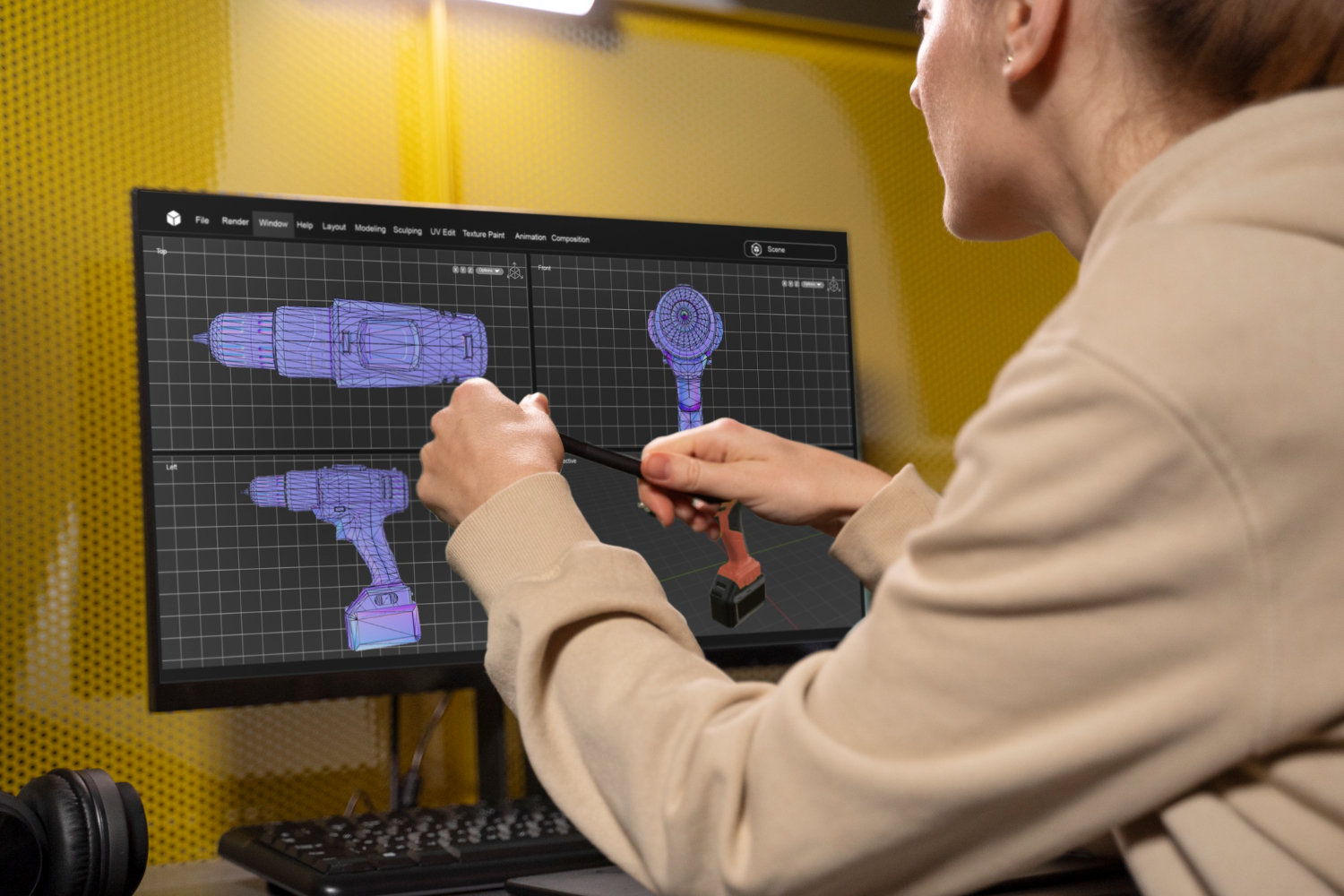
Design during the day, print overnight, test the next morning. A practical workflow for running rapid prototyping iterations at one per day.


Apr 8, 2026
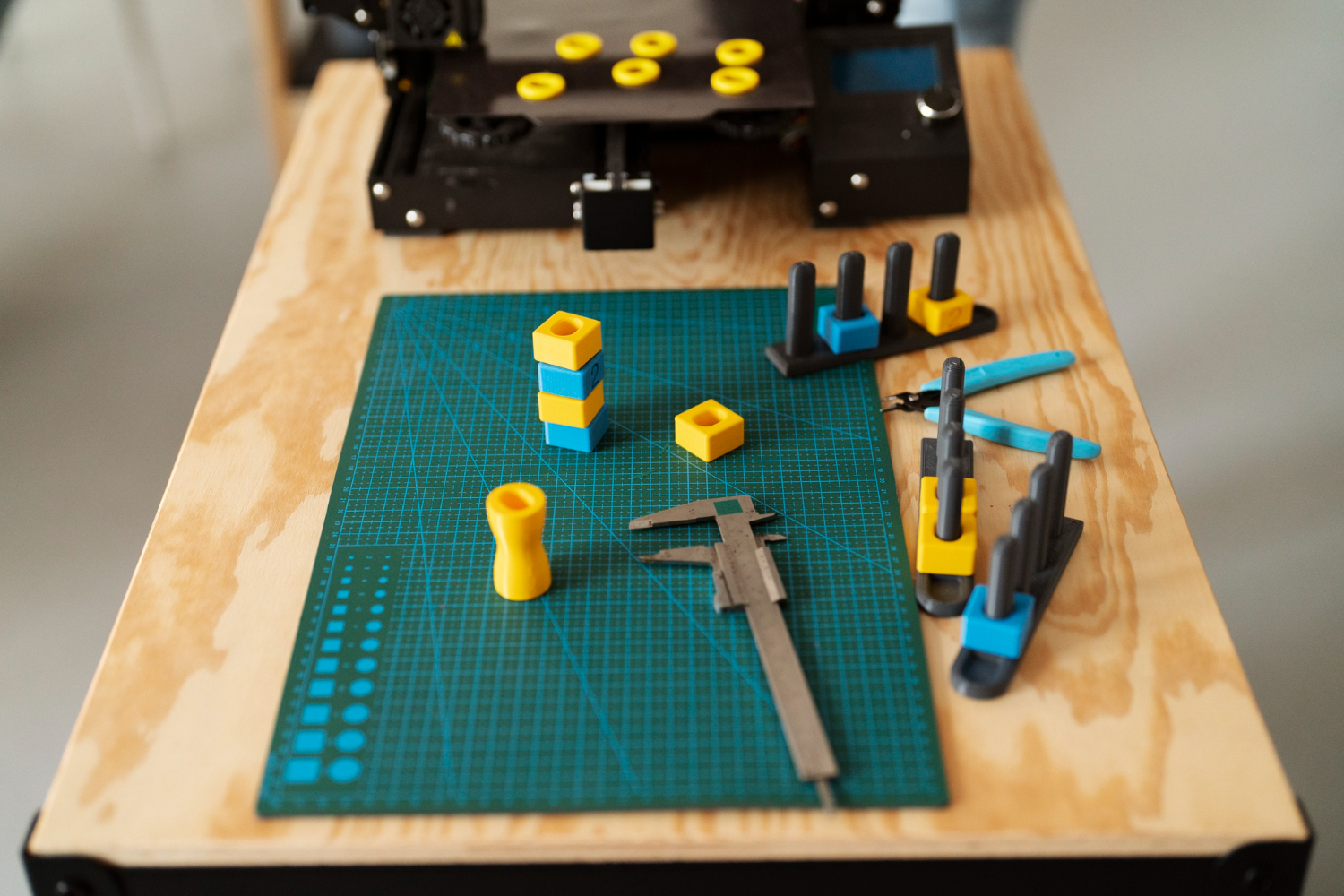
A structured checklist for testing 3D printed prototypes: visual inspection, fit testing, functional validation, and user testing. Get the most out of every iteration.
.webp)




Copyright © 3D On Demand