



Apr 8, 2026
Digital Inventory: How to Eliminate Your Spare Parts Warehouse with 3D Printing
The Hidden Cost of Physical Spare Parts
Most manufacturing and equipment operators maintain physical spare parts inventory as insurance against equipment failure. The math sounds simple: stock parts, avoid downtime. But the financial reality is far less attractive. In the Netherlands and across Europe, warehouse space typically costs €50–150 per square metre annually. For a company storing €100,000 worth of spare parts, accounting for shelving, handling, and climate control, annual warehousing costs easily reach €20,000–€30,000 before accounting for:
- Inventory management software and labour (€5,000–€15,000/year)
- Obsolescence and write-offs (8–12% of inventory value annually)
- Insurance and security
- Slow-moving and dead stock (parts that age in storage without ever being used)
Studies show that 20–55% of spare parts inventory value is consumed by carrying costs alone—yet many of these parts are rarely touched. The irony is even sharper: the parts you need most urgently are often the ones you don't have in stock.
What Is Digital Inventory?
Digital inventory replaces physical stock with a vault of CAD files and production-ready digital models. Instead of shelving brackets, nozzles, gears, and housings, you store the design data. When a part is needed, you print it on demand from a trusted 3D printing partner. The core premise is elegantly simple: digitize once, print whenever needed.
This approach works because 3D printing has matured enough to produce production-quality parts in days or even hours, for a broad range of materials and applications. You're no longer betting on demand forecasting or paying premiums for emergency overnight shipping. The part you need is printed to order, often cheaper and faster than retrieving it from a distant warehouse or waiting weeks for an OEM reorder.
Companies like Shell have already implemented large-scale digital spare parts programs, storing 3D models of equipment components and printing replacements as needed across their global operations. Similarly, Deutsche Bahn (German Railways) has digitised thousands of spare parts for legacy train systems, eliminating the need to warehouse outdated components that may only be needed once every few years.
How Digital Inventory Works: A Practical Roadmap
Transitioning to digital inventory requires a structured approach. Here's how leading organisations implement it:
Step 1: Audit Your Current Inventory
Begin by cataloguing what you're actually storing. For each part family, document:
- Annual demand frequency
- Current holding cost per unit
- Lead time if not in stock
- Shelf life and obsolescence risk
- Current sourcing method (in-house, OEM, distributor)
This audit typically reveals that 60–80% of SKUs represent fewer than 20% of demands. Those slow-moving parts are exactly where digital inventory adds the most value.
Step 2: Identify Candidates for Digitisation
Not every part is suitable for 3D printing—yet. Focus your digitisation efforts on parts that meet these criteria:
- Low to moderate volume demand: Parts needed 1–20 times per year
- Non-critical metal components: Polymers and composites are ideal; metal parts require specialist services and higher costs
- Tolerances within 3D printing range: ±0.3–±0.1 mm depending on technology (SLS, SLA, or FDM)
- No extreme environmental demands: Parts exposed to >200°C sustained heat or aggressive chemicals may still require traditional manufacture
- Geometric complexity: Parts with internal channels, undercuts, or organic shapes benefit most from 3D printing's design freedom
A typical audit might identify 200–500 parts as excellent candidates from a stock of 2,000–5,000 SKUs.
Step 3: Digitise (Scan or Model From Scratch)
You have two paths:
Reverse Engineering & Scanning: If you have a physical reference, 3D scanning (optical, structured light, or CT) can capture geometry in hours. Scans are then cleaned, refined, and prepared for 3D printing. This method is fastest for legacy parts.
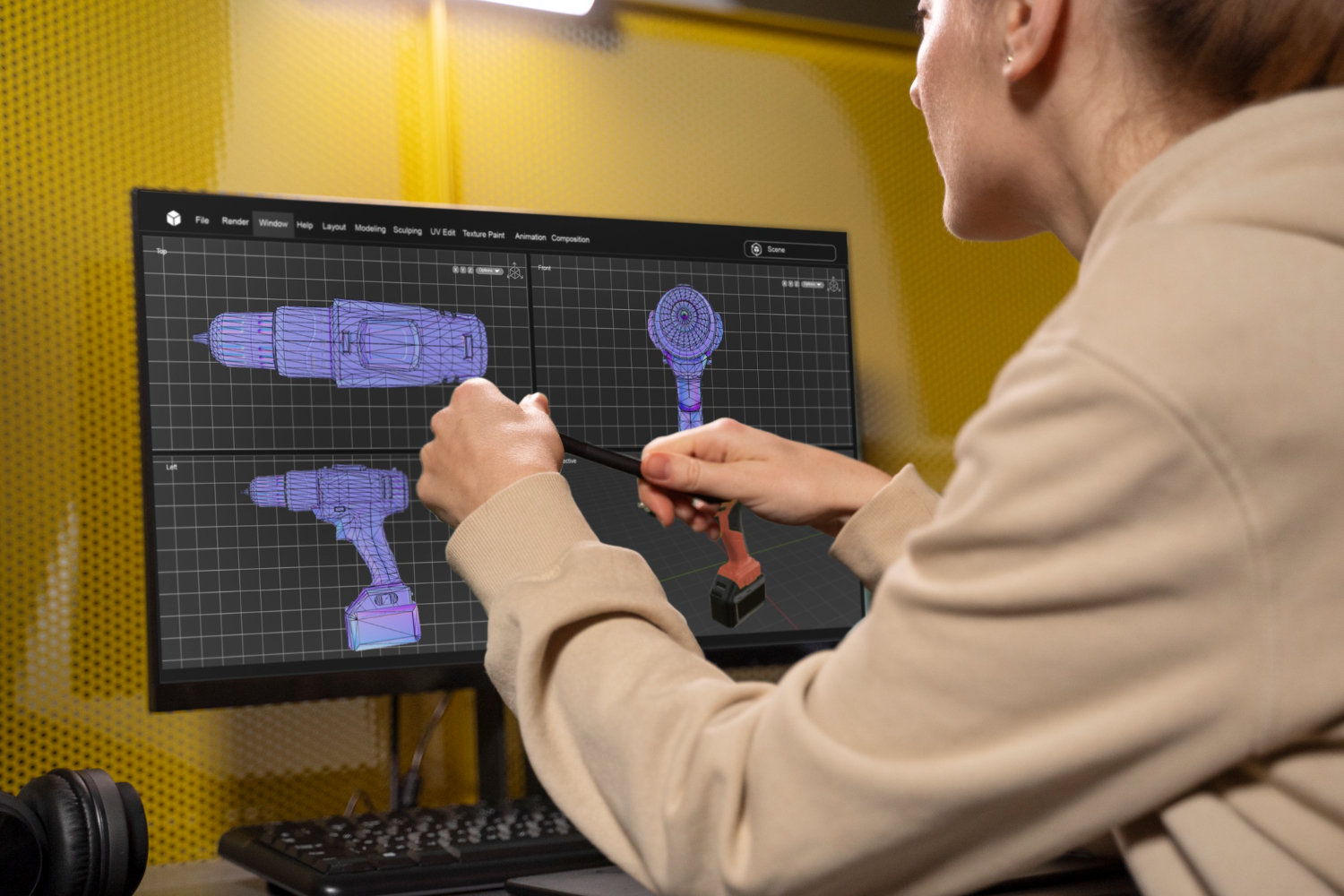
CAD Modelling From Drawings or Specifications: If technical drawings exist, professional CAD technicians can rebuild models from scratch. This takes longer but produces cleaner, more production-ready files.
Storage is trivial: a 10-year archive of 1,000 CAD files occupies perhaps 10–20 GB. Cloud storage costs €1–€5 per month. Compare that to €50–€150 per square metre annually for warehousing.
Step 4: Validate Prints in Your Environment
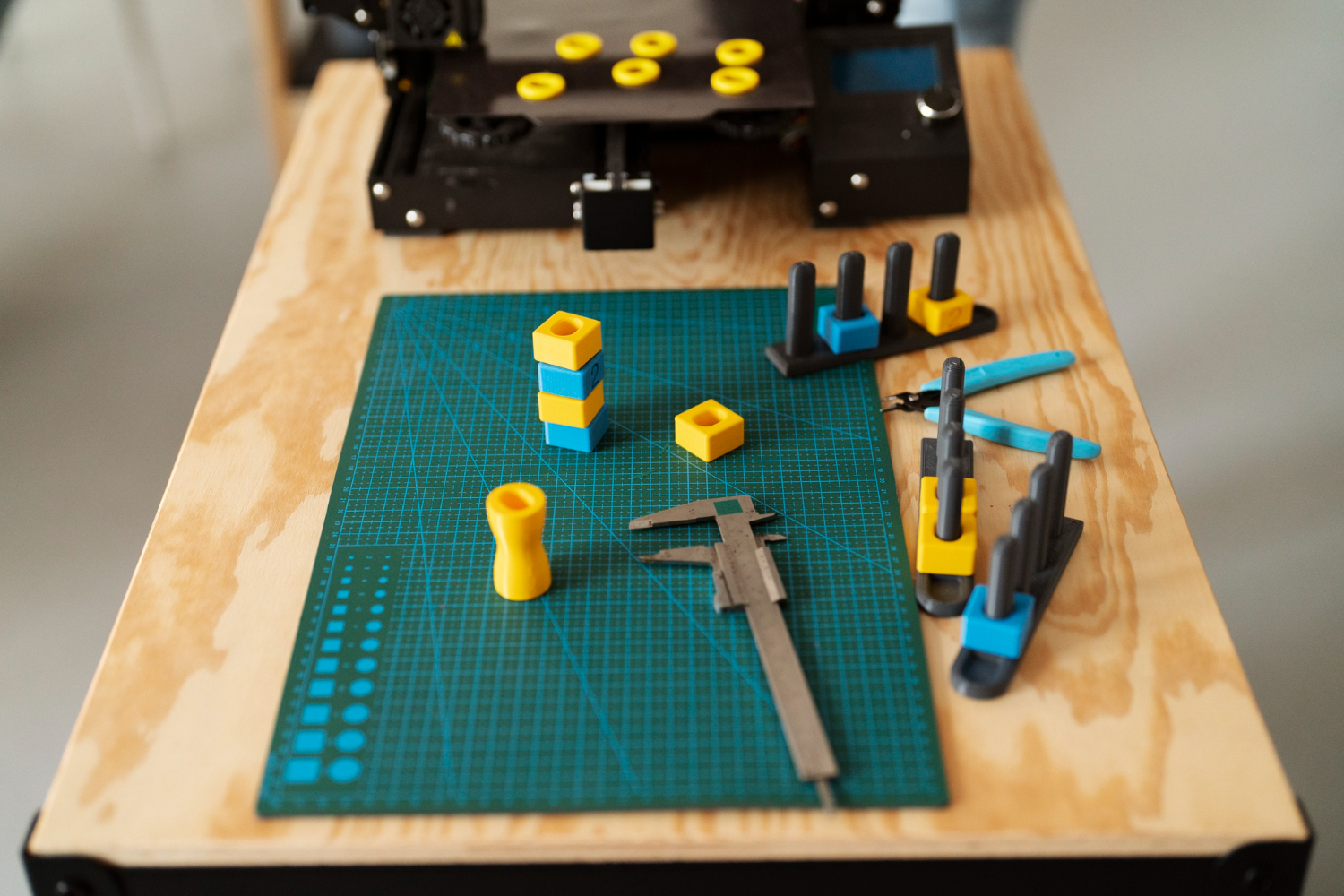
Before committing to digital-only stocking, run validation trials. Order a 3D printed sample of each candidate part and test it in real conditions:
- Does it fit and function as intended?
- Does it meet dimensional tolerances?
- Does performance match or exceed the original?
This step de-risks the transition and gives your procurement team confidence. Validation typically costs €500–€2,000 per part family but pays back quickly.
Step 5: Transition and Decommission
Once validated, physically dispose of or redistribute the old stock. Update your inventory system to flag these parts as "digital stock" and establish printing contracts with qualified 3D printing partners. Define service level agreements: typical lead times are 2–5 working days depending on part size and material.
When Digital Inventory Makes Sense (and When It Doesn't)
Digital inventory is ideal for:
- Low-volume, long-tail spares: Parts ordered fewer than 10 times per year
- Legacy equipment: Older machines where OEM support has ended; 3D printing enables reverse-engineering solutions
- High-value, bulky components: Large housings, ductwork, or structural brackets cost dearly to store
- Multi-location operations: Instead of stocking inventory at five sites, print locally when needed
- Design-change-prone assemblies: If you regularly iterate or upgrade parts, storing digital versions avoids obsolescence
Traditional stocking still wins for:
- High-demand consumables (bearings, seals, fasteners used weekly)
- Critical single-point-of-failure components requiring instant availability
- Parts with strict lead time requirements (< 24 hours)
- Materials 3D printing cannot yet produce reliably (advanced ceramics, pure metals in high-stress roles)
The best approach is hybrid: stock fast-moving items traditionally, digitise the slow-moving tail.
Economics: The Numbers
Let's work through a realistic example. A mid-sized manufacturer with €150,000 in spare parts inventory:
Current State (Physical Stocking):
- Warehouse space: 20 m² at €100/m²/year = €2,000/year
- Inventory management: €8,000/year
- Handling, insurance, security: €5,000/year
- Obsolescence write-off (10%): €15,000/year
- Total annual cost: €30,000
Digital Inventory State (200 of 500 SKUs converted):
- Reduced warehouse space: 8 m² for remaining fast-movers = €800/year
- Simplified inventory management: €3,000/year
- Handling and security (reduced): €2,000/year
- 3D printing on demand: €3,000–€5,000/year (estimated based on historical demand)
- Cloud storage for CAD files: €100/year
- Obsolescence on digital stock: nearly zero
- Total annual cost: €8,900–€10,900
Annual savings: €19,000–€21,000 (65–70% cost reduction)
Payback period for digitisation (scanning, CAD modelling, validation): 3–6 months in this scenario.
Implementation Challenges and How to Overcome Them
IP and Data Security: CAD files are valuable intellectual property. Store them with access controls, encryption, and regular backups. Use secure cloud services or on-premise solutions with audit trails.
Quality Consistency: Partner with a vetted 3D printing bureau that maintains strict process controls and material certifications. Request test reports for critical applications.
Design Ownership: For purchased parts, you may need supplier permission to reverse-engineer and print. This is a commercial and legal consideration worth clarifying upfront.
Material & Process Evolution: 3D printing materials and tolerances improve constantly. Periodically re-evaluate which parts can now be printed that couldn't before, expanding your digital inventory over time.
Getting Started
Digital inventory is not an all-or-nothing transition. Begin with a pilot: identify 20–30 candidate parts, digitise them, validate prints, and measure the cost and operational impact. Use those results to build the business case for broader rollout.
If you're operating warehouses across the Netherlands, Germany, or beyond, the economic case grows even more compelling. The cumulative carrying costs of traditional inventory often justify substantial investment in digitisation and 3D printing partnerships.
Ready to explore digital inventory for your operation? Our engineering and industrial 3D printing services are designed exactly for this use case. We can help you audit your inventory, digitise candidates, validate prints, and establish reliable on-demand production. Get in touch to discuss your spare parts strategy.



Apr 8, 2026
Design during the day, print overnight, test the next morning. A practical workflow for running rapid prototyping iterations at one per day.


Apr 8, 2026
A structured checklist for testing 3D printed prototypes: visual inspection, fit testing, functional validation, and user testing. Get the most out of every iteration.
.webp)




Copyright © 3D On Demand