


Apr 8, 2026
The global drone industry is exploding. The market for 3D printed drones reached $1.02 billion in 2026 and is projected to grow to $4.15 billion by 2034. Whether you're building FPV racing quads, commercial inspection UAVs, or military drones requiring specialized components, 3D printed drone parts on demand is no longer a nice-to-have. It's a competitive advantage.
Traditional manufacturing can't keep pace. Injection molding takes 4-8 weeks and demands minimum orders of 500-1,000 units. CNC machining costs thousands per part. But with on-demand 3D printing, you can design a custom drone component in the morning and have it in your hands in 3-5 business days. No tooling fees. No inventory risk. No compromises.
Why Drone Companies Are Switching to On-Demand 3D Printing
Speed: Design to Part in Days, Not Weeks
A replacement wing section or fuselage that takes 6-8 weeks via traditional tooling? 3-5 business days with 3D printing. Many drone manufacturers now run design-build-test cycles weekly instead of quarterly.
Cost: No Tooling Burden
A single replacement part manufactured traditionally might cost $8,000 when you factor in tooling. The same part, 3D printed on demand, can cost as little as $8. Even at higher volumes, 3D printing often beats injection molding for runs under 1,000 units.
- Prototype testing becomes economical. Validate designs without bankrolling massive tooling investments.
- Field service becomes practical. A drone operator in a remote inspection site can have a replacement part printed and shipped to their location.
- Design variations become feasible. Test multiple configurations in parallel without choosing between them due to cost.
Iteration: Weekly Design Cycles Instead of Quarterly
Companies like DJI, Uvify, and emerging startups iterate weekly. New bearing mount design? Print it Friday afternoon, test Monday, refine Tuesday, print again Wednesday.
Supply Chain Resilience: Print at Point of Need
Instead of maintaining warehouses of pre-made parts, you maintain digital designs and print locally when needed. This eliminates obsolete inventory, reduces geographic friction, and cuts working capital requirements.
No Minimum Order Quantities
Order 1 part for a one-off prototype. Order 5 for field testing. Order 500 for pre-production validation. Order 5,000 for market launch. The same manufacturing partner handles all of these with the same lead time.
Materials Available for Drone Parts
Nylon PA12 is the workhorse of drone manufacturing. It's tough, lightweight, dimensionally stable, and cost-effective. Use it for frames, motor mounts, landing gear, and any part that needs to absorb impact without shattering.
Carbon Fiber Nylon trades some toughness for stiffness and weight reduction. A carbon fiber nylon frame is lighter and more rigid than plain nylon—critical for racing quads.
PETG and ASA offer weather resistance. ASA laughs at UV and humidity—it's your go-to for agricultural drones that spend all day in sunlight.
TPU is flexible and vibration-dampening. Motor mounts, landing pad bumpers, cable clips—anywhere you need compliance without rigidity.
We've published a comprehensive guide to materials in Best 3D Printing Materials for Drone Parts.
Technologies: Which 3D Printing Process for Your Drone Parts?
FDM: Speed and Economy
FDM melts plastic filament layer by layer. Most affordable technology. Best for: Prototypes, large structural parts, cost-sensitive applications. Lead time: 2-4 days.
SLS: Complex Geometry Without Supports
SLS uses a laser to fuse powder particles. Complex geometry, integrated features, lattice structures. Best for: Functional parts with undercuts, vibration isolation components. Lead time: 3-5 days. Strength: Isotropic.
MJF: Production-Grade Parts
MJF combines SLS design freedom with better surface finish. The UAV Works HUNTER—a commercial mapping drone—is 96% 3D printed using MJF technology. Best for: Production-grade parts, small to mid-volume runs. Lead time: 3-5 days.
SLA: Precision and Smooth Surfaces
SLA uses UV light to cure liquid resin. Exceptional surface finish and tight tolerances. Best for: Camera gimbal mounts, aerodynamic fairings, tight-tolerance connectors. Lead time: 2-4 days.
For a deep technical comparison, see FDM vs SLS for Drone Parts.
How It Works: From CAD to Delivered Part
Step 1: Upload Your CAD File
We accept STL, STEP, 3MF, and IGES files. Upload from your browser in seconds.
Step 2: Instant Quote with Recommendations
Our system instantly analyzes your geometry and generates a quote with optimal material and technology recommendations.
Step 3: Engineer Review and DFM
A production engineer reviews every order: wall thickness optimization, orientation analysis, support strategy, and feature highlighting. You approve before production.
Step 4: Production (1-3 Days)
FDM: 1-3 days. SLS: 2-4 days. SLA: 1-3 days. MJF: 2-4 days. Express 24-48 hour delivery available.
Step 5: Quality Inspection and Shipping
Every part is visually inspected and dimensionally spot-checked. Ships across Europe in 2-3 additional days. Most European orders arrive within 5-7 calendar days from upload.
What Drone Parts Can You 3D Print?
Structural Components: Frames, arms, fuselage sections, boom extensions, flight frame segments.
Mounting Hardware: Motor mounts, camera gimbal brackets, propeller guards, landing gear, antenna mounts, payload plates.
Shells and Enclosures: Canopies, battery enclosures, motor covers, custom payload pods.
Internal Components: Cable management clips, vibration isolation mounts, PCB brackets, connector housings.
Specialized Parts: Sensor enclosures, calibration targets, field-replaceable module interfaces.
Real-World Use Cases
FPV Racing: Carbon fiber nylon frames cost $25-40 and can be reprinted in 48 hours. Crash Sunday, new frame Wednesday.
Commercial Inspection: Ruggedized nylon or CF-nylon parts optimized for environmental exposure give platforms the durability they need in harsh conditions.
Agricultural Drones: ASA 3D-printed parts resist UV and spray chemicals. Field-replaceable by the operator.
Defense: The U.S. Army's Sprint program prints critical drone components on-demand in the field, reducing supply chain vulnerability.
R&D and Universities: ETH Zurich, MIT—rapid iteration for innovative drone research.
Why 3D On Demand for Your Drone Parts?
- Multi-Technology Under One Roof: FDM, SLS, SLA, and MJF systems. One upload, one order, one point of contact.
- European Production, Fast EU Delivery: No customs delays. Most orders arrive within 5-7 business days.
- Engineer Review on Every Order: DFM feedback before production. We catch issues before they cost you.
- No Minimum Orders: One part or 1,000 parts—same service, same attention.
- Standard Turnaround: 3-5 Days. Express: 24-48 Hours.
The Economics: When Does 3D Printing Make Sense?
Prototyping: 3D printing always wins. A prototype frame: 4 days and €150 vs. 6 weeks and €2,000 via molding.
Low-volume (1-500 units): 3D printing usually wins when you factor in tooling costs.
Mid-volume (500-5,000): Depends on design stability. If your design evolves, 3D printing remains competitive.
On-demand spares: 3D printing always wins. Print on-demand beats warehouse inventory.
Getting Started
1. Prepare Your CAD File: Export as STL, STEP, or 3MF.
2. Upload and Get Instant Quote: Material recommendation, technology recommendation, unit cost, lead time.
3. Approve and Produce: Engineer reviews within 24 hours. You approve DFM recommendations, we move to production.
Supporting Resources
- Best 3D Printing Materials for Drone Parts — Material properties, cost breakdown, and application guidance.
- 3D Printing for Drone Weight Reduction — Lattice structures, topology optimization, and material selection.
- Rapid Prototyping Drones with 3D Printing — Complete process guide for drone prototyping teams.
- FDM vs SLS for Drone Parts — Technical comparison of technologies.
Speed Wins in Drone Manufacturing
The drone industry moves fast. Companies that iterate quickly, validate designs in weeks instead of quarters, and replace parts on-demand have a structural advantage. 3D printed drone parts on demand give you the speed, flexibility, and cost efficiency you need to win. No tooling charges. No MOQs. No waiting.
3D-demand.com is your European on-demand 3D printing partner for drone components. FDM, SLS, SLA, and MJF technologies. No MOQs. Fast turnaround. Engineer review on every order.


Apr 8, 2026
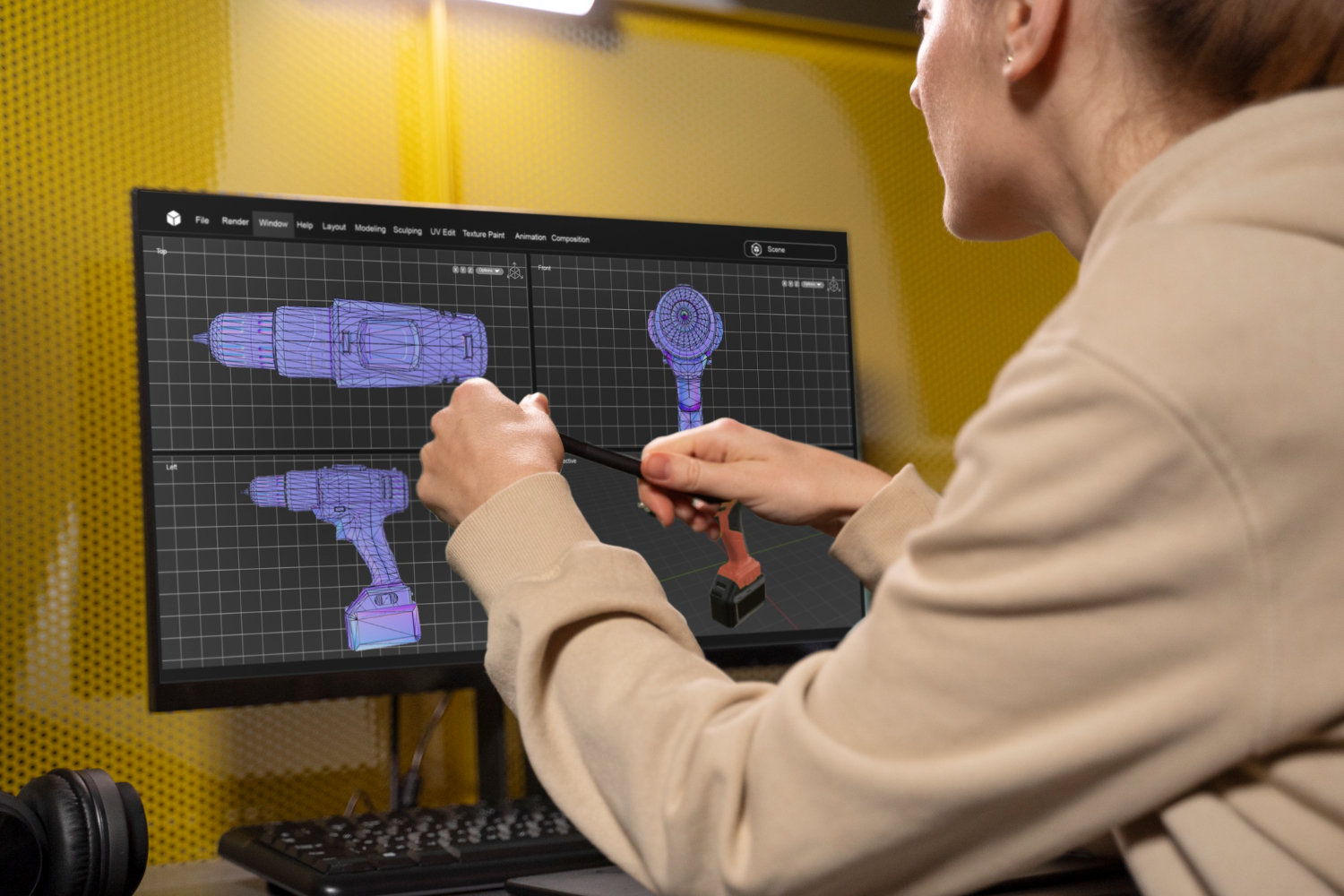
Design during the day, print overnight, test the next morning. A practical workflow for running rapid prototyping iterations at one per day.


Apr 8, 2026
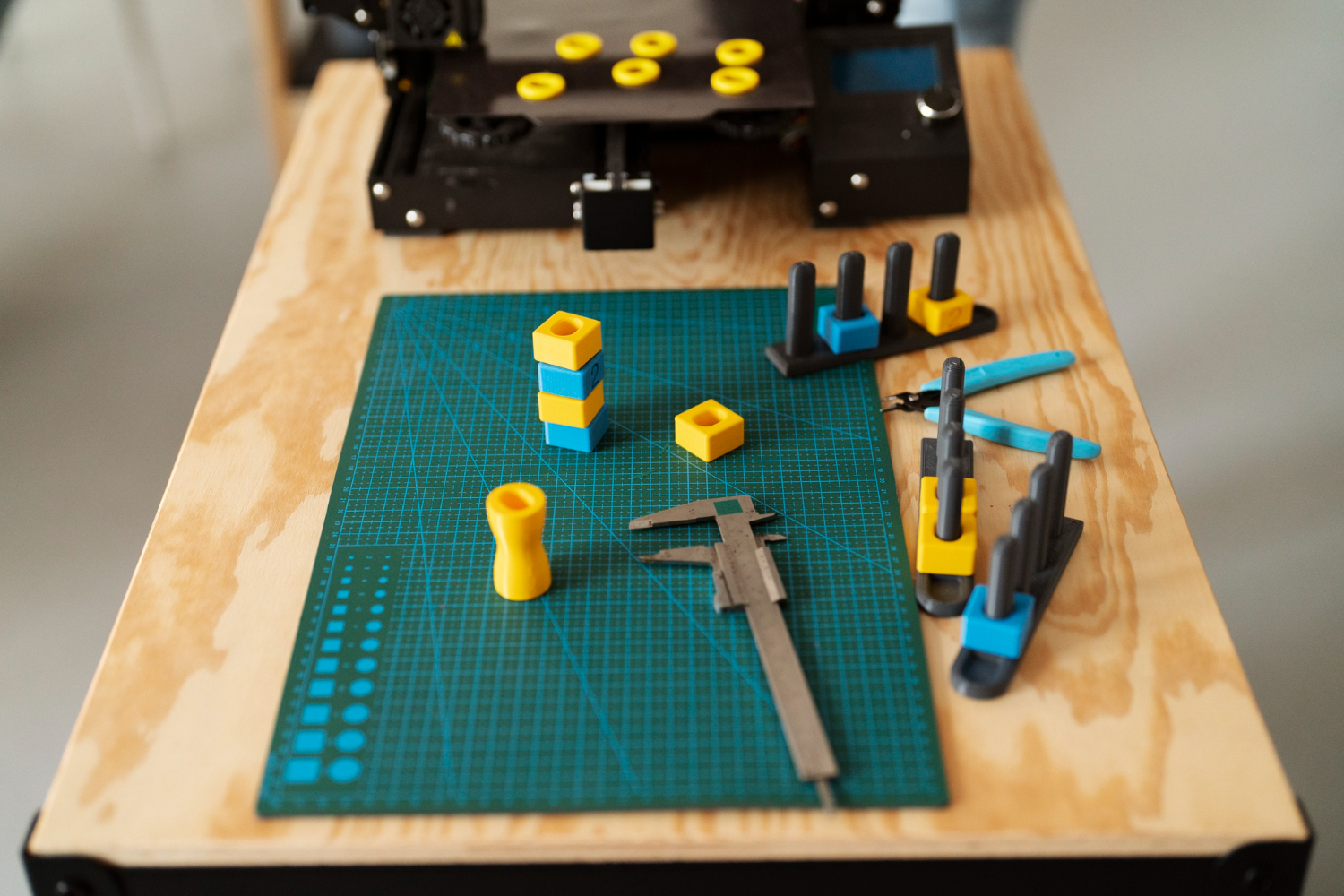
A structured checklist for testing 3D printed prototypes: visual inspection, fit testing, functional validation, and user testing. Get the most out of every iteration.
.webp)





Copyright © 3D On Demand