


Apr 8, 2026
How 3D Printing Cuts Machine Downtime: The Real Cost of Waiting for Spare Parts
The Cost of Not Having a Part
A bearing fails on your production line. You call the OEM. The lead time is 4–8 weeks. The assembly line stops. Your labour force stands idle. Customers' orders slip. Revenue evaporates.
This scenario plays out thousands of times across European manufacturing every week. Yet many plant managers treat spare parts as a logistics afterthought, not a production asset with quantifiable ROI. The numbers tell a different story.
Hourly downtime costs by industry (typical ranges for mid-sized European operations):
- Automotive manufacturing: €5,000–€50,000/hour (assembly lines run fast; full lines down = massive loss)
- Food and beverage processing: €3,000–€30,000/hour (depends on production scale and product spoilage)
- Pharmaceuticals: €2,000–€15,000/hour (plus regulatory and batch risk costs)
- General manufacturing (machine shops, fabricators): €1,000–€10,000/hour
- Electronics assembly: €2,000–€20,000/hour
A conveyor system down for 3 days waiting for a replacement idler bearing costs €24,000 (€3,000/hour × 72 hours) in lost output alone. Add labour, expedited shipping, and premium pricing for emergency OEM supply, and the true cost exceeds €30,000.
Now imagine that same bearing could be 3D printed and fitted in 48 hours for €150–€300. The economics are stark.
The Spare Parts Problem
Why is downtime such a common problem? Several structural issues plague traditional spare parts supply:
Long Lead Times
OEMs often source components from specialist suppliers with 2–8 week production cycles. Even if parts are in stock at a distributor, international shipping adds 1–2 weeks. For a €50 bearing, you might wait a month—or pay premium rates for expedited delivery that still takes 5–7 days.
Minimum Order Quantities
Many OEMs enforce minimum orders of 5, 10, or even 50 units. You need one replacement seal; they'll sell you ten. The excess sits on your shelf until it becomes obsolete.
Discontinued Parts and Legacy Equipment
Equipment that's been in service for 10+ years faces a real risk: the OEM has discontinued the part. Your equipment is still running; the supply chain for its components has evaporated. Reverse engineering from an old sample or scrounging from other defunct machines becomes the only option.
A brewery with a 15-year-old filling machine faces this constantly. A single custom nozzle or valve is essential, unavailable, and will cost thousands to custom-engineer from scratch—unless you can reverse-engineer and 3D print it.
Geographic Supply Delays
Plants in Eastern Europe, Scandinavia, or rural regions are especially vulnerable. A two-day part in Western Europe becomes a week-long supply chain in smaller countries. Emergency shipments via courier become routine.
How 3D Printing Solves the Spare Parts Problem
3D printing addresses every pain point above:
Speed: 2–5 working day turnaround from file to delivered part, versus 2–8 weeks from OEM. You lose production for days, not weeks.
No Minimum Orders: Print one part. Print 100. The economics are identical. No forced excess inventory.
Reverse Engineering: Damaged or obsolete parts can be scanned, modelled, and reproduced. Legacy equipment becomes repairable again.
Local Production: Parts can be printed from a local or nearby bureau, avoiding complex international logistics. 3D-Demand operates across the Netherlands and Europe—spare parts can be in your hands in days, not weeks.
What Types of Spare Parts Can Be 3D Printed?
Not every component is a candidate for 3D printing. The best candidates share these traits:
Ideal for 3D Printing:
- Polymer housings and covers: Enclosures, cable glands, mounting brackets. PA12 nylon is extremely robust.
- Low-to-moderate stress components: Spacers, bushings, guides, alignment pins. 3D-printed PA12 delivers 48 MPa tensile strength—sufficient for most non-load-bearing roles.
- Geometrically complex parts: Parts with internal features, organic shapes, or integrated snap-fits benefit most from design freedom.
- Wear parts with infrequent replacement: A seal ring, gasket holder, or valve stem may be replaced once every 2–5 years. Printing on demand beats warehousing inventory.
- Legacy or custom parts: Parts no longer available from the original supplier. Reverse engineering + 3D printing is often the only option.
Less Suitable (though sometimes possible):
- High-temperature components (>150°C sustained): 3D-printed polymers lose strength above 120–150°C. Metals or ceramics required.
- Heavy-load-bearing parts: A connecting rod or crankshaft needs metal strength. 3D printing isn't suitable.
- Precision bearings or threaded inserts: These are better purchased as complete assemblies.
- Consumables with very tight tolerance stacks: Parts requiring <0.05 mm tolerances are borderline (possible with SLA, but expensive).
Worked Example: ROI of 3D-Printed Emergency Parts
Scenario: A conveyor system in a food processing facility fails. A custom mounting bracket (part of the motor assembly) is broken. Replacement part is unavailable from the OEM. Lead time via distributor: 6 weeks. The line is running €8,000/hour in lost processing when stopped.
Option A: Wait for OEM
- Lead time: 6 weeks (42 days)
- Cost of downtime: 42 days × 24 hours × €3,000/hour = €3,024,000 (if continuous, but realistically 16–20 hours/day operating) = €2,016,000–€2,520,000
- OEM replacement cost: €250–€500
- Total cost: €2,016,250–€2,520,500
Option B: 3D Printing
- Scan/reverse engineer the part: 1 day (€300–€500 if outsourced)
- Design and 3D print: 2–3 days (€400–€800 for medium-sized bracket in PA12)
- Installation and validation: 0.5 day
- Total downtime: 3.5 days at 16 hours/day (accounting for off-hours) = 56 hours
- Cost of downtime: 56 hours × €3,000 = €168,000
- Part cost: €800
- Total cost: €168,800
Savings: €1,847,450–€2,351,700 (92–93% reduction)!
Even accounting for failed first attempts, rework, or expedited shipping, 3D printing saves hundreds of thousands of euros compared to waiting for OEM supply.
Practical Implementation: Building an Emergency Spare Parts System
Step 1: Audit Critical Components – Which parts, if they failed, would shut down production? Focus on these: motors, gearboxes, pump housings, seals, valve bodies, control panel covers, mounting brackets. List at least 20–30 critical assemblies.
Step 2: Create Digital Records – For each critical part, obtain:
- Technical drawing or CAD model
- Photograph from multiple angles
- Physical sample (if available)
If CAD doesn't exist, 3D scanning (optical or CT) takes a few hours and costs €200–€500 per part. This one-time investment pays back immediately in the first emergency.
Step 3: Establish a 3D Printing Partner – You don't need to buy a printer yourself. Partner with a reputable 3D printing service bureau (like 3D-Demand) that guarantees:
- 2–5 working day turnaround for standard parts
- Material certificates and quality documentation
- Ability to handle urgent jobs with expedited fees (€100–€200 premium for 24-hour service)
- Experience with industrial polymers (PA12, carbon-reinforced materials)
Step 4: Validate Prototype Prints – Before relying on a printed part in production, order a test sample and run it in your equipment:
- Does it fit and mate correctly with adjacent components?
- Does it pass functional tests (stress, temperature, vibration)?
- Does dimensional tolerance meet requirements?
- Cost: €400–€800 per part family, but de-risks future emergency orders.
Step 5: Document and Train – Create a quick-reference guide for your maintenance team:
- Which parts are 3D-printable in an emergency
- Contact details and lead times for your 3D printing partner
- Budget sign-off process (so a €500 urgent print doesn't get blocked)
When to Print vs. When to Stock
3D printing doesn't eliminate the need for physical spare parts inventory. The optimal strategy combines both:
Stock physically:
- High-demand consumables (bearings, seals, fasteners used monthly or more)
- Single-point-of-failure critical items (require <24-hour availability)
- Items with long lead times and high replacement frequency
Print on demand:
- Low-frequency parts (replaced once per year or less)
- Bulky or expensive items (housings, large brackets)
- Legacy or discontinued components (OEM unavailable)
- Learn more about 3D printing for spare parts.
Hidden Benefits Beyond Speed
Design Iteration: If the original part had a design flaw that caused failure, you can improve it in the printed version. Example: add reinforcement ribs or increase wall thickness where stress concentrated.
Reverse Engineering Capability: Many plants have equipment from suppliers that no longer exist. 3D printing resurrects these assets. A 20-year-old German machine tool with a missing bracket can be brought back to life with a scanned + printed replacement.
Reduced Logistics Complexity: No international shipping, customs, or three-week courier delays. Local printing means local control.
Environmental Benefit: Printing one part on demand beats manufacturing and shipping 50 units, of which 49 become waste.
Building a Maintenance Culture Around 3D Printing
Introducing 3D-printed spares requires cultural buy-in from maintenance teams. Some best practices:
- Start with visible wins: Use 3D printing for a few non-critical spares first. Prove reliability before trusting it with critical systems.
- Communicate urgency: Show your maintenance team the cost of downtime. When they understand that waiting 2 weeks costs €50,000 and printing costs €300, support becomes easy.
- Create fast-track approval for urgent prints: Build a decision-making process that doesn't stall emergency orders in bureaucracy.
- Document successes: When a 3D-printed part saves the day, document it. Share the story with operators and managers. Build confidence.
Getting Started Today
If you're running manufacturing operations in the Netherlands, Germany, or across Europe, downtime is costing you thousands of euros weekly. 3D printing emergency spare parts is no longer experimental—it's practical, proven, and profitable.
Start small: identify your 5 most critical spare parts. Get them scanned and 3D printed as a pilot. Validate one in your equipment. Then expand the program as confidence builds.
Our engineering and industrial 3D printing service is designed for exactly this use case. We maintain fast turnaround schedules and material certifications for production-critical parts. We've helped manufacturers across Europe cut downtime, reduce inventory costs, and improve equipment availability.
Contact us today with photos of parts you'd like to make 3D-printable. We'll assess candidacy, provide lead time and cost estimates, and help you build your emergency spare parts system.



Apr 8, 2026
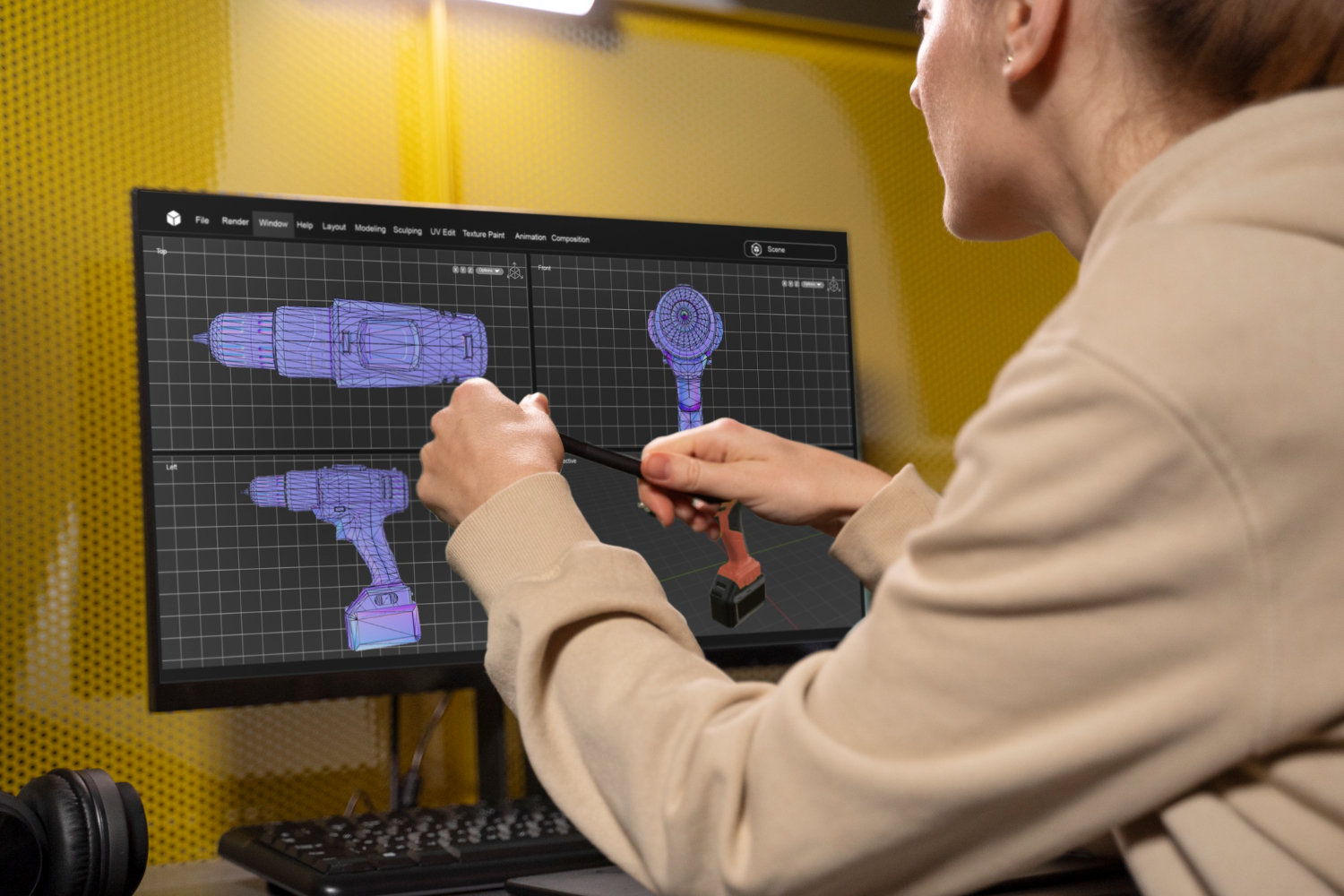
Design during the day, print overnight, test the next morning. A practical workflow for running rapid prototyping iterations at one per day.


Apr 8, 2026
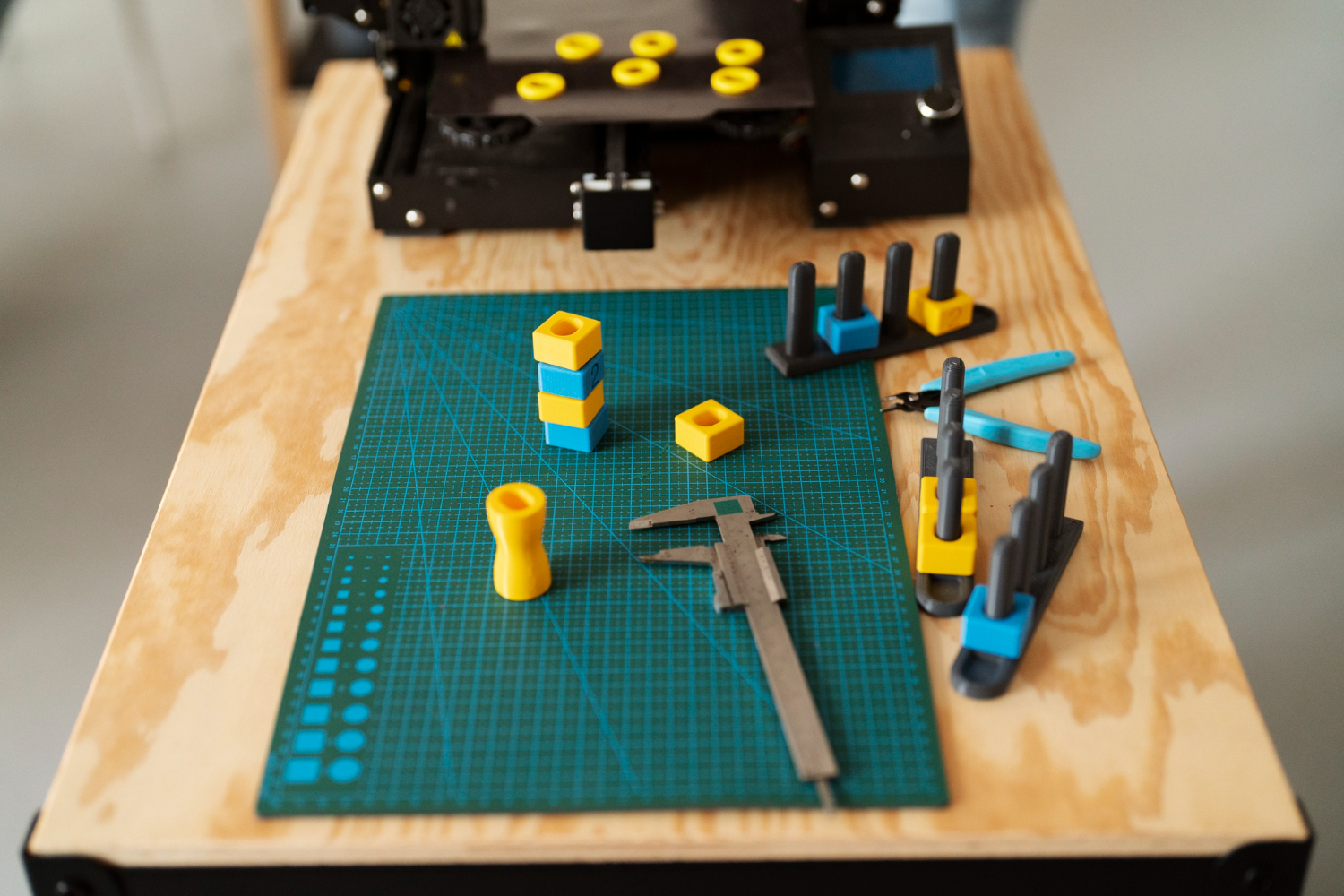
A structured checklist for testing 3D printed prototypes: visual inspection, fit testing, functional validation, and user testing. Get the most out of every iteration.
.webp)





Copyright © 3D On Demand